



Un smartwatch avec lampe torche est très utile pour un éclairage bref et de près pendant la course, la randonnée, le camping et d’autres activités de plein air. Son principal atout vient de l’accès immédiat : la lumière est déjà au poignet lorsqu’un itinéraire, du matériel ou un problème de sécurité demande de l’attention.

Pourquoi une lampe torche montée au poignet est-elle importante en extérieur ?
Les activités de plein air créent de nombreux petits besoins d’éclairage qui ne nécessitent pas une lampe torche puissante à la main. Un coureur doit vérifier un lacet desserré. Un randonneur doit lire un balisage ombragé. Un campeur doit trouver un médicament dans un sac à dos.
Un smartwatch avec lampe torche permet de faire cela sans sortir un téléphone, ouvrir un sac ou occuper une main. L’utilisateur lève le poignet, dirige la lumière vers la tâche, et continue son activité.
Cela rend cette fonction particulièrement utile lorsque :
- Le besoin d’éclairage apparaît sans prévenir.
- La cible se trouve à quelques pieds de l’utilisateur.
- Les deux mains sont nécessaires pour le matériel, les premiers secours ou la navigation.
La lampe torche devient alors moins une mini-lampe frontale qu’un outil immédiat de résolution de problèmes.
Quelle est l’utilité d’une lampe torche sur smartwatch pendant la course ?
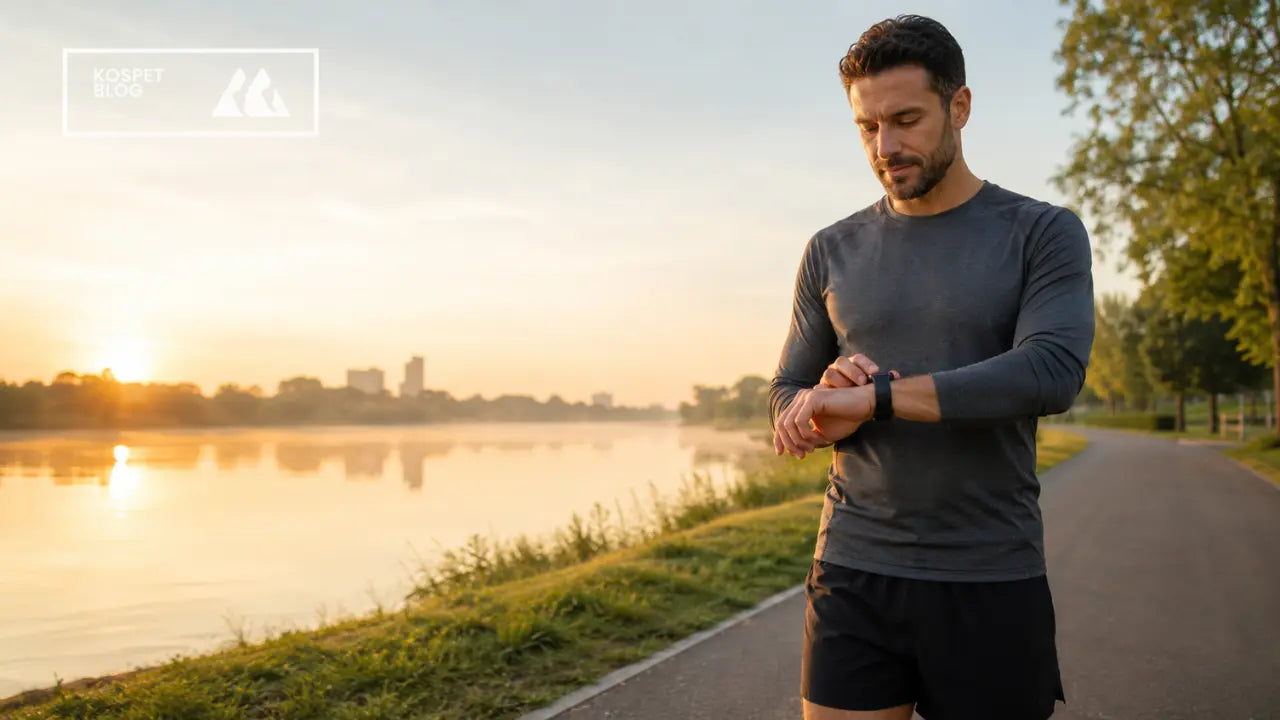
La course à pied crée de courts besoins d’éclairage avant, pendant et après l’entraînement. Une lumière au poignet permet d’en gérer beaucoup sans obliger le coureur à porter un autre appareil.
Vérifier un sol irrégulier dans des zones partiellement éclairées
Les lampadaires n’éclairent presque jamais un itinéraire entier de façon uniforme. Des zones sombres apparaissent aux entrées de parcs, sous les passages, dans les allées, sur les escaliers et entre les poteaux lumineux.
Un smartwatch avec lampe torche pour la course peut révéler un trottoir, une flaque, un nid-de-poule ou une portion de chaussée endommagée à proximité. La lumière n’a besoin d’éclairer que les quelques pas suivants, ce qui rend la portée courte plus importante que la distance du faisceau.
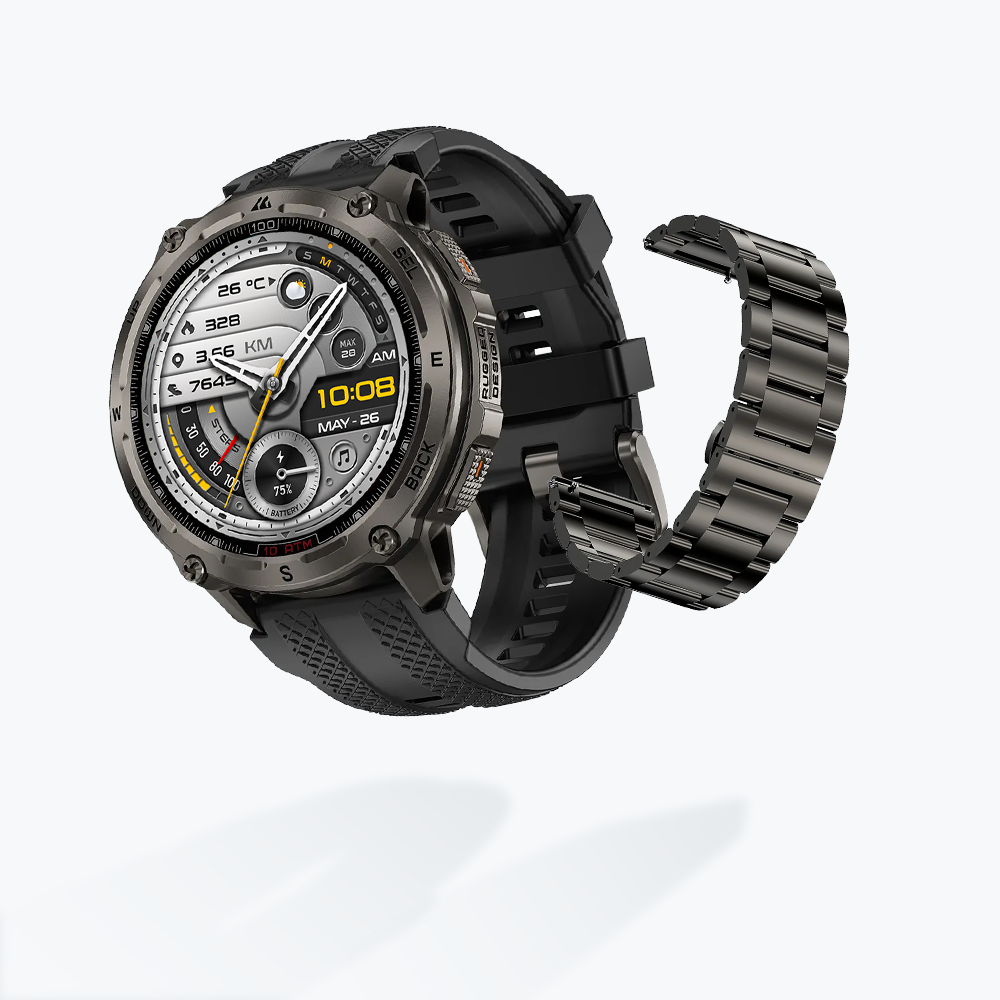
La KOSPET TANK T4C utilise une LED intégrée avec cinq niveaux de luminosité. Un niveau faible convient à une vérification rapide de la surface sans éblouir, tandis qu’un niveau plus élevé apporte davantage de lumière sur une courte zone sombre.
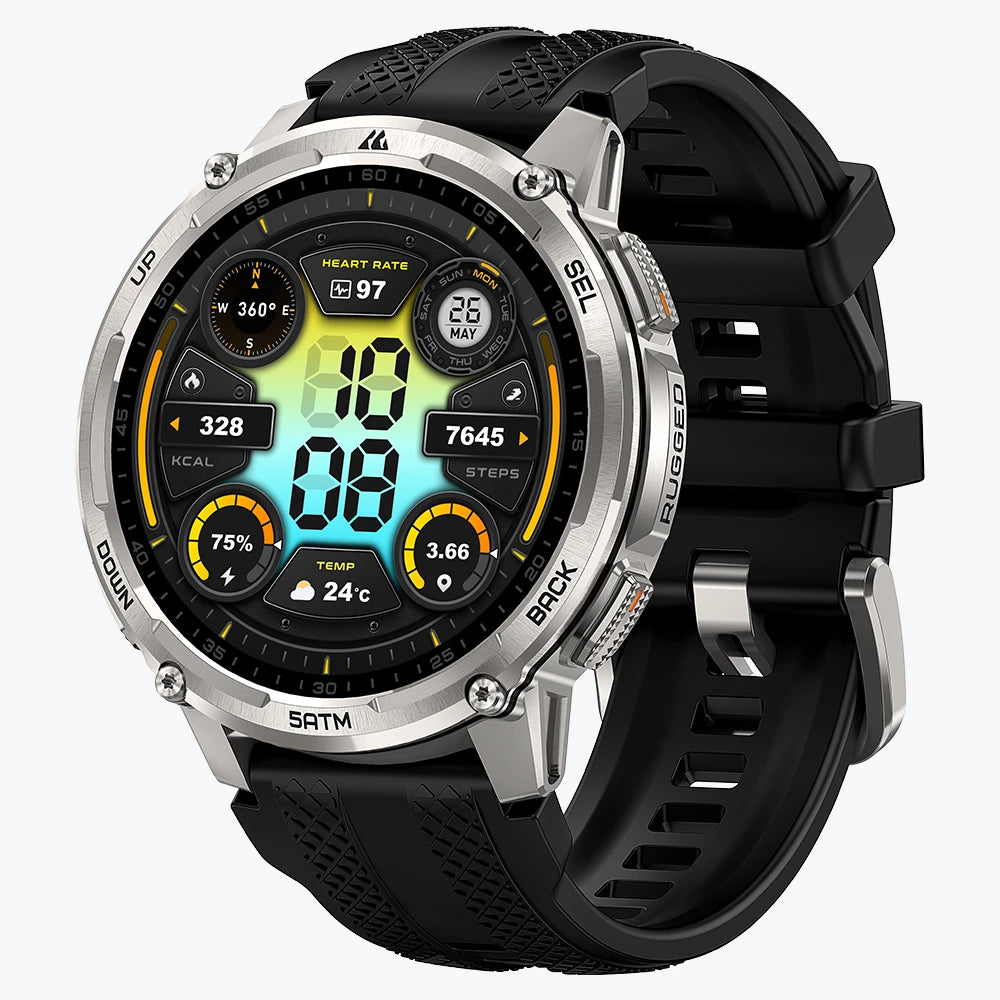
KOSPET TANK T4C Smartwatch
159,99 €EUR
Ajuster l’équipement de course
Des lacets desserrés, des bandes réfléchissantes tordues, des écouteurs déplacés et des ceintures de running mal fixées nécessitent de la lumière à proximité des mains.
La lampe torche d’un téléphone occupe une main et demande souvent plusieurs étapes pour être déverrouillée et activée. Une LED au poignet garde les deux mains disponibles, ce qui permet de serrer, reconnecter ou récupérer le matériel plus efficacement.
C’est l’un des meilleurs usages de cette fonction, car le faisceau suit naturellement les mains vers le problème.
Gérer un itinéraire soudainement plongé dans l’obscurité
Une séance peut durer plus longtemps que prévu. Un parcours familier peut comporter un lampadaire hors service. Un détour peut mener vers un chemin plus sombre.
La lumière immédiate aide le coureur à inspecter la nouvelle portion, repérer une sortie, lire un panneau ou se diriger vers une route plus éclairée. La smartwatch n’a pas besoin d’éclairer tout le reste du trajet pour être utile ; elle doit seulement aider le coureur à prendre la prochaine décision en toute sécurité.
Retrouver des objets tombés
Les clés, écouteurs, gels énergétiques et petits accessoires sont difficiles à retrouver sur un sol sombre ou dans l’herbe. Le coureur peut s’arrêter, baisser le poignet et diriger la lumière sur la zone de recherche sans tenir un téléphone près du sol.
Renforcer la visibilité de nuit
Une lumière mobile au poignet peut attirer l’attention, surtout lorsqu’elle clignote. Garmin a intégré des modes stroboscopiques synchronisés à la cadence dans certaines montres outdoor, montrant que l’éclairage au poignet peut être pensé pour le mouvement de course plutôt que pour servir uniquement de lampe fixe.
La lumière reste un complément aux vêtements réfléchissants et aux équipements dédiés à la visibilité. La NHTSA indique que les piétons surestiment souvent leur visibilité auprès des conducteurs et que les matériaux rétroréfléchissants placés sur les extrémités en mouvement améliorent la reconnaissance nocturne.
Une étude contrôlée de conduite de nuit a aussi montré que les réflecteurs biomotion sur les articulations aidaient les conducteurs à reconnaître les piétons plus tôt et à identifier plus rapidement leur direction. Ces données confirment l’intérêt des संकेत de visibilité liés au mouvement, même si elles n’établissent pas qu’une LED de smartwatch produit le même effet qu’un marquage réfléchissant sur les articulations.
Utilité de la course en un coup d’œil
| Situation de course | Utilité | Problème résolu |
|---|---|---|
| Ajuster les chaussures ou l’équipement | Élevée | Garde les deux mains disponibles |
| Vérifier la chaussée à proximité | Élevée | Révèle les dangers de surface proches |
| Traverser une courte zone sombre | Élevée | Fournit une lumière temporaire immédiate |
| Retrouver un objet tombé | Élevée | Dirige la lumière près du sol |
| Signaler sa présence aux autres | Moyenne | Ajoute un signal lumineux mobile ou clignotant |
| Éclairer en continu un sentier non éclairé | Faible comme lumière principale | Le mouvement du poignet empêche un faisceau avant stable |
Quelle est l’utilité d’une lampe torche sur smartwatch en randonnée ?
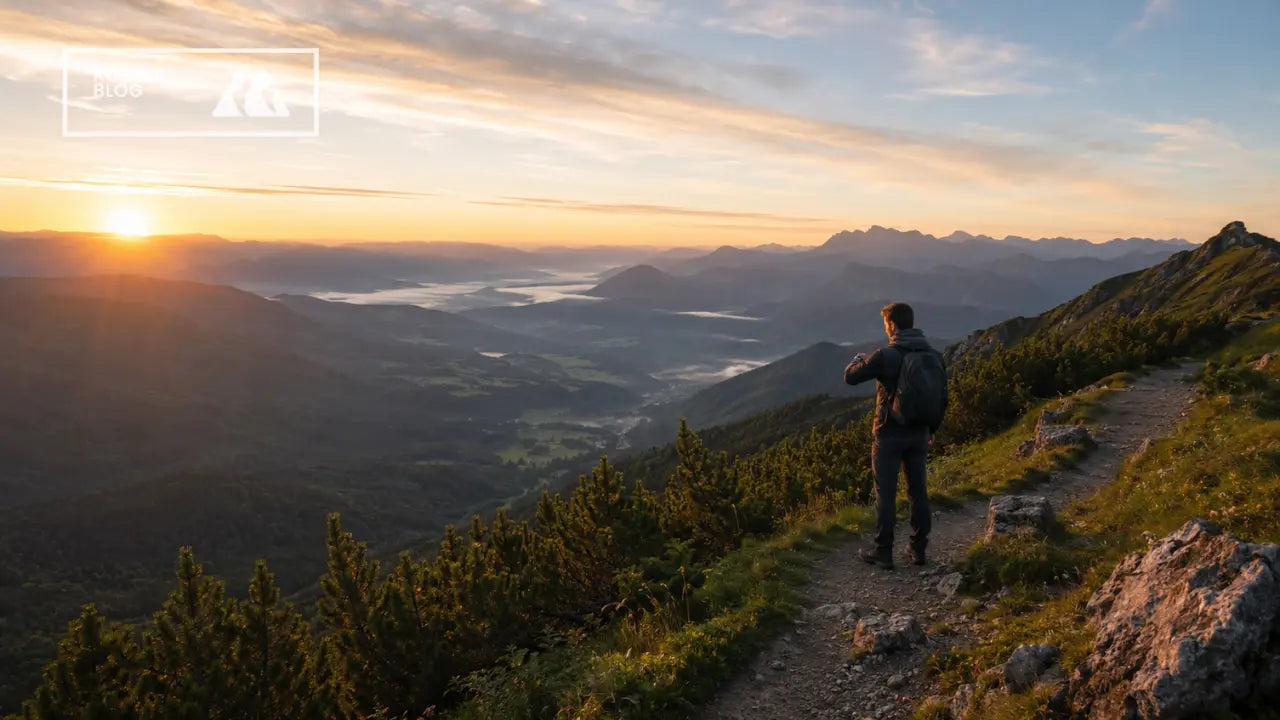
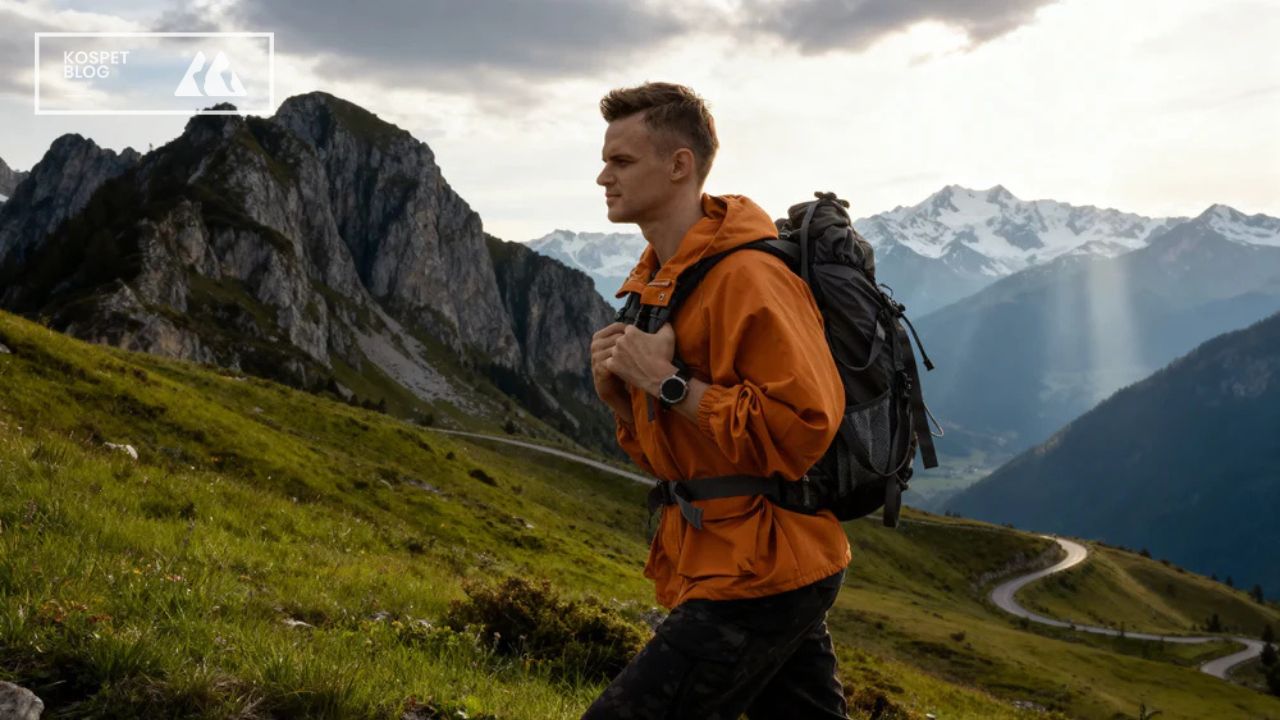
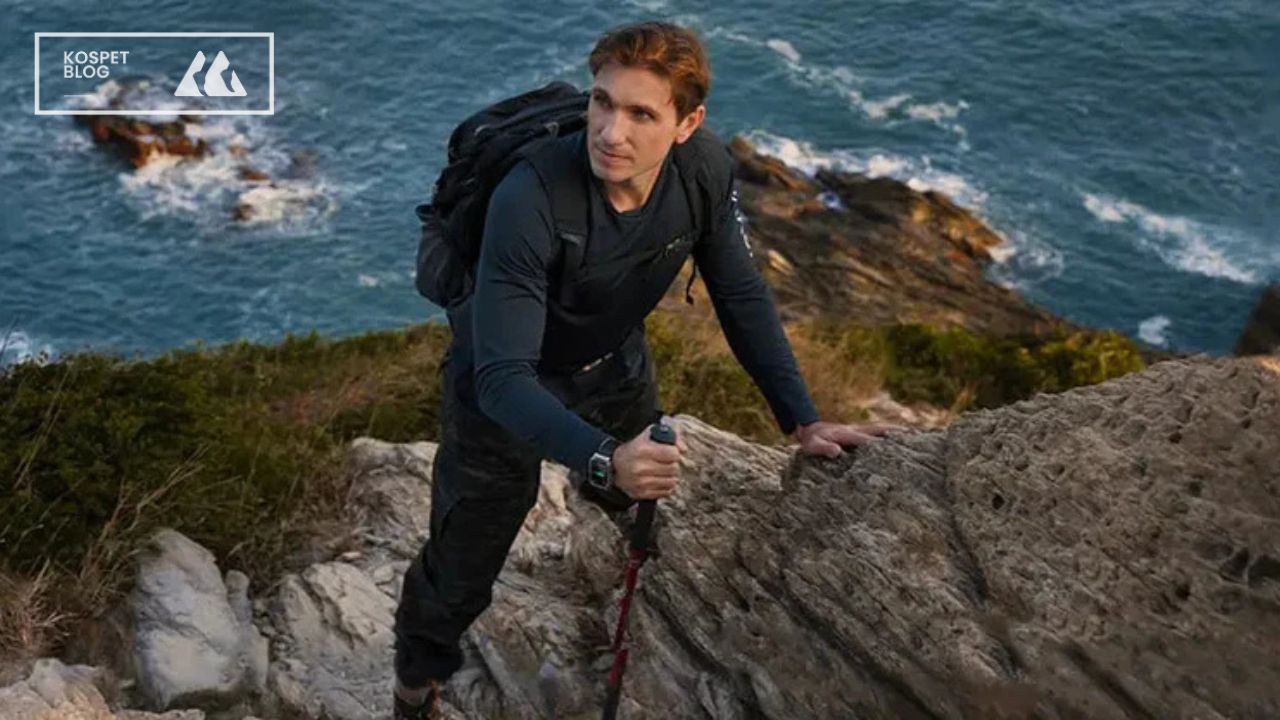
La randonnée implique généralement des mouvements plus lents que la course, ce qui donne à l’utilisateur un meilleur contrôle du faisceau. La lampe torche devient particulièrement utile lors des pauses, des vérifications de matériel et des transitions entre le jour et la nuit.
Lire les panneaux de sentier et les informations d’itinéraire
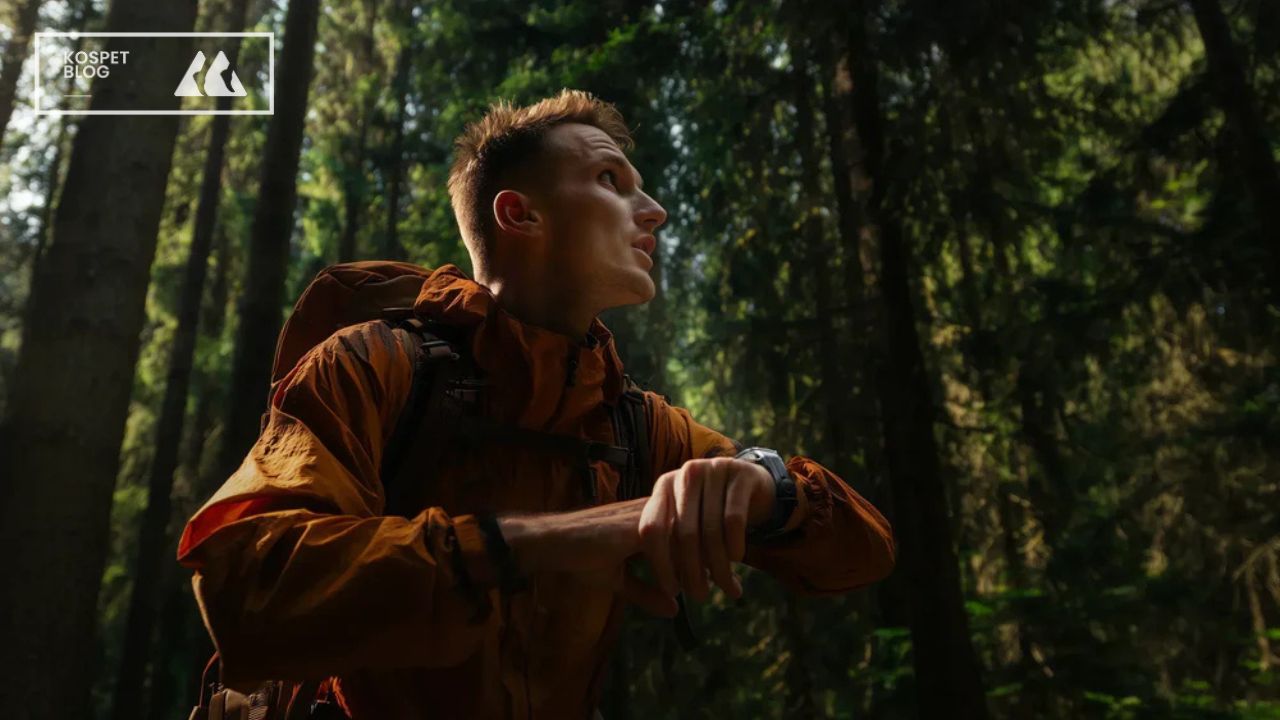
Les balises de randonnée se trouvent souvent sous les arbres, dans les ombres ou sur des surfaces usées. Une lumière au poignet peut éclairer le panneau pendant que l’autre main tient une carte, une boussole ou un téléphone.
La KOSPET TANK T4C associe sa lampe torche LED au GPS, à une boussole, à un altimètre barométrique, aux informations de lever et coucher du soleil, ainsi qu’à une fonction de retour au point de départ. Ces outils soutiennent une séquence de randonnée courante : s’arrêter, éclairer la zone immédiate, vérifier la direction ou l’altitude, puis continuer.
Chercher à l’intérieur d’un sac à dos
Les petits objets ont tendance à se glisser sous les vêtements, la nourriture et le matériel. Tenir un téléphone au-dessus du sac ne laisse qu’une seule main libre pour chercher.
Une lampe torche au poignet place la lumière près de l’ouverture du sac à dos tout en laissant les deux mains libres. Cela améliore l’accès aux trousses de premiers secours, aux piles, aux en-cas, aux gants et aux outils de navigation.
Ajuster les chaussures et l’équipement de sentier
Des lacets de bottes desserrés, des verrous de bâtons de randonnée, des boucles de sac à dos, des tubes d’eau et des housses de pluie nécessitent une lumière proche et dirigée.
Ces tâches conviennent à un faisceau au poignet, car la main et la cible occupent la même zone de travail. La lumière se dirige vers la boucle, le nœud ou la fixation au lieu de devoir éclairer le sentier devant soi.
Gérer des blessures mineures
Ampoules, coupures, échardes, piqûres d’insectes et ongles abîmés nécessitent suffisamment de lumière pour identifier le problème et utiliser les premiers secours.
Une lampe torche sur smartwatch permet à une main de positionner la zone blessée pendant que l’autre nettoie, couvre ou examine la blessure. La lumière reste proche de la zone à traiter sans nécessiter qu’une autre personne la tienne.
Réagir à la tombée de la nuit
Les randonneurs ont souvent besoin de lumière avant la nuit complète. Un panneau de sentier devient difficile à lire, du matériel doit être ajusté ou la lampe frontale principale reste enfouie dans le sac.
Une lumière au poignet couvre cette période de transition. Elle aide à récupérer la lumière principale, confirmer l’itinéraire et accomplir une tâche proche sans transformer un petit délai en problème plus important.
Faire face à une défaillance de la lumière principale
Une lampe frontale peut manquer de batterie, subir des dégâts d’eau ou être égarée. La lampe torche de la smartwatch fournit une lumière de secours immédiate pour changer les piles, trouver une autre lampe, lire un repère ou organiser une sortie.
KOSPET indique jusqu’à cinq heures d’utilisation continue de la LED pour la TANK T4C dans ses conditions de test. Ce chiffre donne à la lampe torche un véritable potentiel d’urgence, même si l’autonomie réelle pendant le suivi GPS et d’autres fonctions simultanées n’est pas précisée.
Utilité en randonnée en un coup d’œil
| Situation de randonnée | Utilité | Problème résolu |
|---|---|---|
| Lire des cartes et des balises de sentier | Élevée | Éclaire les informations d’itinéraire |
| Chercher dans un sac | Élevée | Laisse les deux mains disponibles |
| Ajuster les bottes et l’équipement | Élevée | Place la lumière près de la zone de travail |
| Soigner des blessures mineures | Élevée | Soutient les gestes de premiers secours de près |
| Récupérer une lampe frontale après le coucher du soleil | Élevée | Fournit une lumière de transition immédiate |
| Continuer sur un terrain technique | Faible comme lumière principale | Nécessite un éclairage plus large et plus stable |
Quelle est son utilité pour le camping et les autres tâches en extérieur ?

Le camping place la plupart des tâches d’éclairage à portée de bras, ce qui correspond aux points forts naturels d’une lampe torche sur smartwatch.
- Dans une tente : Un faible niveau de luminosité peut éclairer les vêtements, les fermetures éclair, les médicaments, les câbles et les objets personnels sans illuminer tout l’abri.
- Installer le matériel : Le faisceau peut suivre les mains lors de la fixation des clips de tente, de la connexion des arceaux, du serrage des sangles ou de la vérification des haubans.
- Préparer les repas ou les boissons : Une lumière à courte portée aide à repérer les ustensiles, ouvrir les emballages et inspecter la zone de préparation.
- Pêche : Les hameçons, les lignes, les nœuds et les outils restent proches du poignet, ce qui rend une lampe de montre pratique pour les travaux manuels détaillés.
- Réparations en extérieur : L’utilisateur peut inspecter une boucle, une chaîne, une fixation ou un accessoire endommagé tout en gardant les deux mains disponibles.
- Promenade du chien : La lampe torche peut aider à retrouver des clés, manipuler des sacs à déjections, inspecter une patte ou vérifier le sol à proximité.
La sortie réglable devient particulièrement utile dans ces contextes. Les cinq niveaux de luminosité de la TANK T4C permettent à la même LED de servir de lampe de tente sans éblouissement, de lumière de proximité pour le matériel ou de source d’urgence plus puissante.
| Tâche extérieure | Utilité | Pourquoi cela fonctionne |
|---|---|---|
| Utilisation de la tente et du sac à dos | Élevée | La cible reste proche |
| Installation et réparations du matériel | Élevée | Le faisceau suit les mains |
| Pêche et nouage | Élevée | Soutient les travaux minutieux |
| Déplacement sur le campement | Moyenne | Couvre les obstacles proches |
| Promenade du chien | Moyenne | Résout des tâches courtes et locales |
| Cyclisme en mouvement | Faible comme lumière de sécurité | Des lumières de vélo dédiées offrent une visibilité fixe |
Qu’est-ce qui rend la lampe torche utile pendant l’exercice ?
Une fonction lampe torche n’apporte une vraie valeur que lorsqu’elle correspond à la façon dont les gens se déplacent et manipulent leur équipement en extérieur.
Un vrai faisceau LED
Un écran de montre lumineux produit assez de lumière pour une clé, une fermeture éclair ou une étiquette. Une LED intégrée projette la lumière au-delà de l’affichage et atteint le sol ou le matériel à proximité.
Cette différence influence directement l’utilité pendant la course et la randonnée. La lumière de l’écran aide pour les tâches personnelles de près ; une LED aide à la fois pour les tâches proches et pour de brefs contrôles de l’environnement.
Accès rapide
Les utilisateurs outdoor ont souvent besoin de lumière en portant des gants, des bâtons, du matériel ou en poursuivant une activité.
Des boutons physiques et des raccourcis réduisent le temps entre la détection d’un problème et son éclairage. La TANK T4C dispose de quatre boutons physiques, ce qui donne au matériel une base d’utilisation dans des conditions où le contrôle tactile devient moins pratique.
Sortie réglable
Un seul niveau de luminosité convient rarement à toutes les tâches en extérieur.
Une faible sortie réduit l’éblouissement lors de la lecture d’une carte ou de la recherche dans une tente. Une sortie moyenne convient aux ajustements du matériel. Une sortie plus élevée fournit un éclairage du sol plus utile lors de courtes zones sombres.
Le réglage de la luminosité évite aussi une consommation inutile de batterie quand la puissance maximale n’apporte aucun avantage pratique.
Direction utile du faisceau
La lumière doit atteindre la cible depuis une position naturelle du poignet. Un faisceau qui exige des torsions constantes devient fatigant et moins fiable pendant le mouvement.
L’éclairage au poignet fonctionne mieux pour les tâches proches des mains. L’éclairage d’itinéraire demande un faisceau fixe aligné avec la direction du déplacement, ce qui explique pourquoi la même lampe torche peut sembler excellente pendant une réparation et instable pendant une course sur sentier.
Autonomie suffisante pour la tâche visée
La TANK T4C est annoncée pour jusqu’à 18–21 heures d’utilisation GPS continue et jusqu’à cinq heures d’utilisation LED continue, mais KOSPET présente ces valeurs comme des scénarios de test séparés. L’autonomie combinée GPS + lampe torche correspond donc à une autre charge de travail et ne doit pas être déduite de l’un ou l’autre de ces chiffres.
Pour une utilisation normale en extérieur, les impulsions courtes comptent plus que l’autonomie continue. Les vérifications de matériel, la confirmation d’itinéraire, l’inspection de blessures et la recherche dans un sac à dos prennent généralement des minutes plutôt que des heures.
FAQ
Une lampe torche sur smartwatch est-elle assez lumineuse pour courir la nuit ?
Une lampe torche sur smartwatch peut éclairer la chaussée proche, les trottoirs, les flaques et de courts espaces entre les lampadaires. Elle fonctionne bien comme lumière d’appoint sur des itinéraires partiellement éclairés.
Courir en continu sur des routes ou sentiers sombres demande un faisceau plus long et plus stable. Comme la lumière suit le balancement du bras du coureur, une lampe frontale ou pectorale reste plus efficace pour voir les obstacles plus loin devant.
Une lampe torche sur smartwatch peut-elle remplacer une lampe frontale pour la randonnée ?
Une lampe torche sur smartwatch peut remplacer une lampe frontale pour de courtes tâches comme lire des balises de sentier, vérifier du matériel, chercher dans un sac à dos et soigner des blessures mineures.
La randonnée de nuit et les terrains techniques exigent un éclairage frontal continu. Une lampe frontale reste alignée avec le regard de l’utilisateur et couvre une zone plus large, tandis que la lampe torche de la smartwatch fonctionne mieux comme lumière secondaire immédiatement accessible.
L’utilisation de la lampe torche vide-t-elle rapidement la batterie de la smartwatch ?
La consommation de batterie dépend de la luminosité, de la durée d’utilisation et des autres fonctions actives. Une utilisation continue à pleine luminosité consomme nettement plus d’énergie que de courtes vérifications d’équipement ou sessions de lecture de carte.
Le suivi GPS, le suivi de la fréquence cardiaque, le Bluetooth, la navigation et l’utilisation de la lampe torche puisent tous dans la même batterie. KOSPET annonce pour la TANK T4C jusqu’à cinq heures d’utilisation LED continue et 18–21 heures d’utilisation GPS continue dans des conditions de test distinctes. Ces chiffres ne représentent pas un fonctionnement simultané du GPS et de la lampe torche.
Une LED intégrée est-elle meilleure qu’une lampe torche d’écran en extérieur ?
Une LED intégrée est plus utile pour les activités de plein air, car elle projette un faisceau directionnel vers le sol, le matériel ou l’environnement proche. Elle peut soutenir de courtes zones sombres, des ajustements d’équipement et des tâches d’urgence.
Une lampe torche d’écran crée une lueur douce autour du poignet. Elle reste pratique pour les clés, les fermetures éclair, les cartes et les objets dans une tente, mais sa portée est limitée. Des produits comme la KOSPET TANK T4C utilisent une LED dédiée avec luminosité réglable, offrant aux utilisateurs davantage de contrôle selon les différentes tâches en extérieur.



Laisser un commentaire
Ce site est protégé par hCaptcha, et la Politique de confidentialité et les Conditions de service de hCaptcha s’appliquent.