


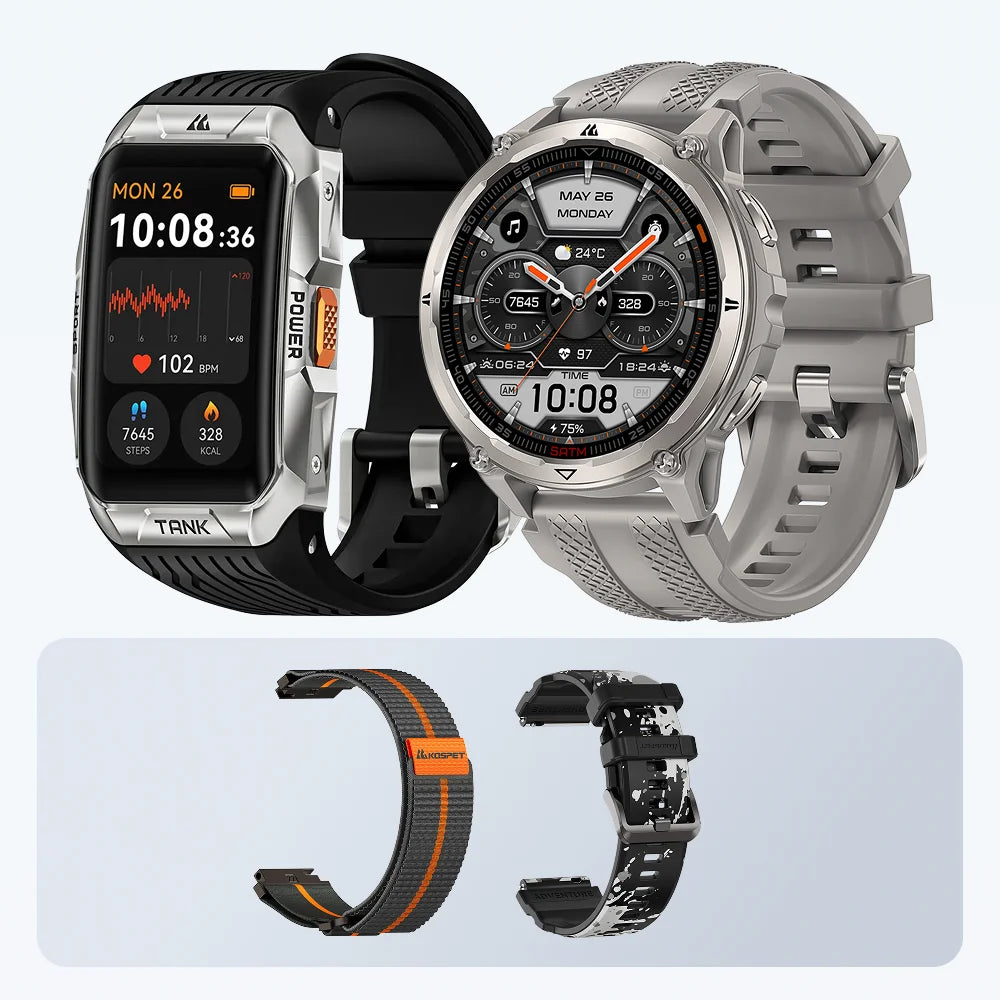
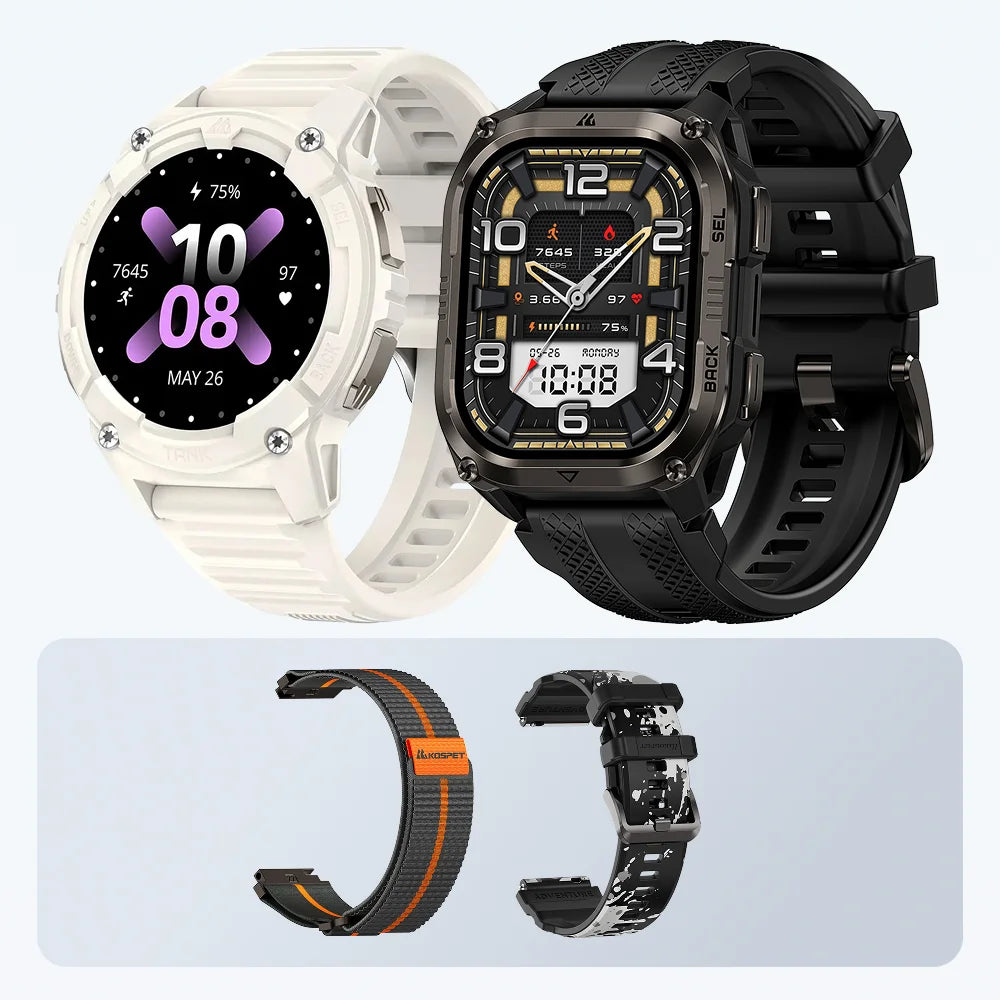
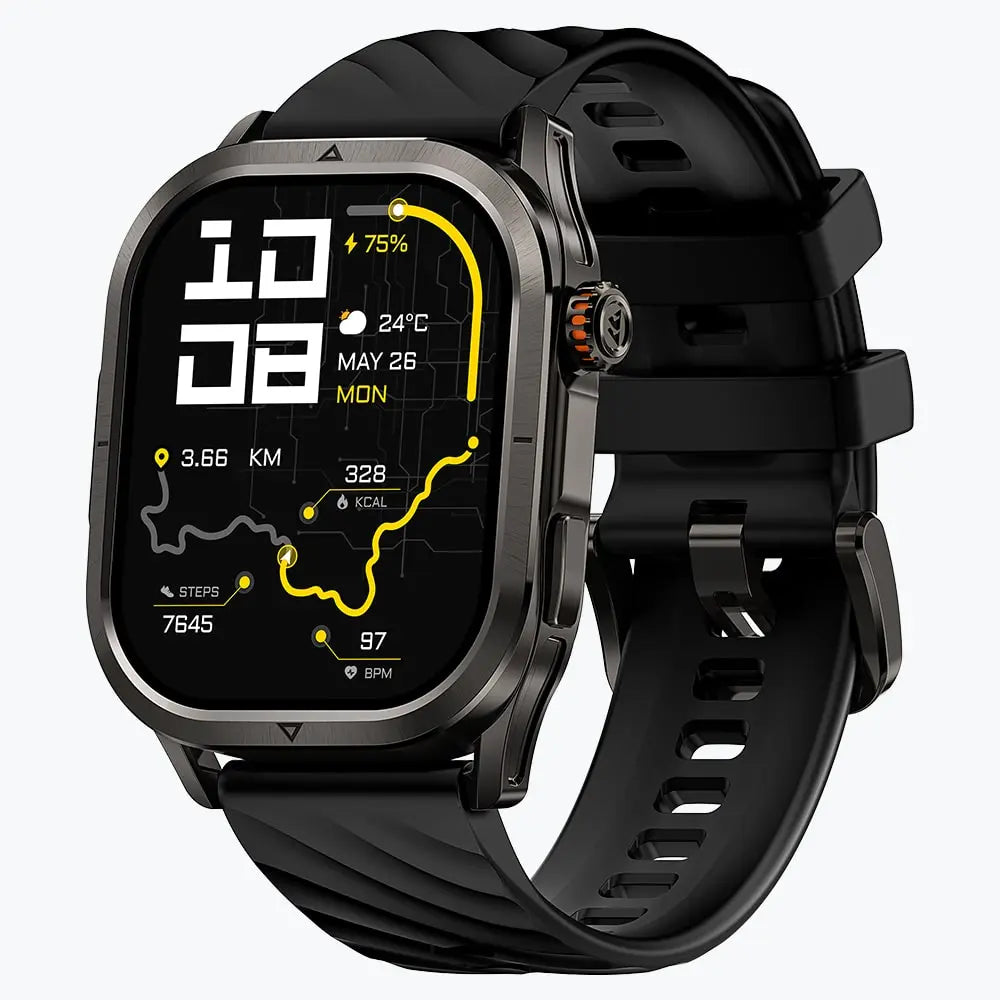


A rugged smartwatch needs enough power for the way you actually use it. A long workweek, an always-on screen, and several days of GPS tracking place very different demands on the same battery.
For readers comparing KOSPET options, the TANK T4C, TANK T4 Special Edition, and TANK M4 all offer around two weeks of typical use. The more useful differences appear when you look at screen settings, outdoor tools, and the hours you need to record.

Start With Your Charging Routine
Before comparing models, decide what you want to keep running between charges. This helps avoid buying a watch that meets the advertised number but misses your actual needs.
| Your main concern | Figure to compare | What it means for your choice |
|---|---|---|
| Getting through workdays and nights with fewer charging interruptions | Typical and heavy use | Include the health tracking, notifications, and calls you intend to use. Heavy-use estimates may be more relevant to a busy routine. |
| Keeping the time visible throughout the day | Always-on display or AOD | Check whether the AOD estimate reaches your preferred charging interval. A two-week typical-use claim does not establish a week of always-on use. |
| Recording hikes or outdoor training | Continuous GPS hours | Add up your recording time across the whole trip. Leave capacity for timekeeping, screen checks, and overnight use as well. |
Compare KOSPET Battery Life by Use Mode
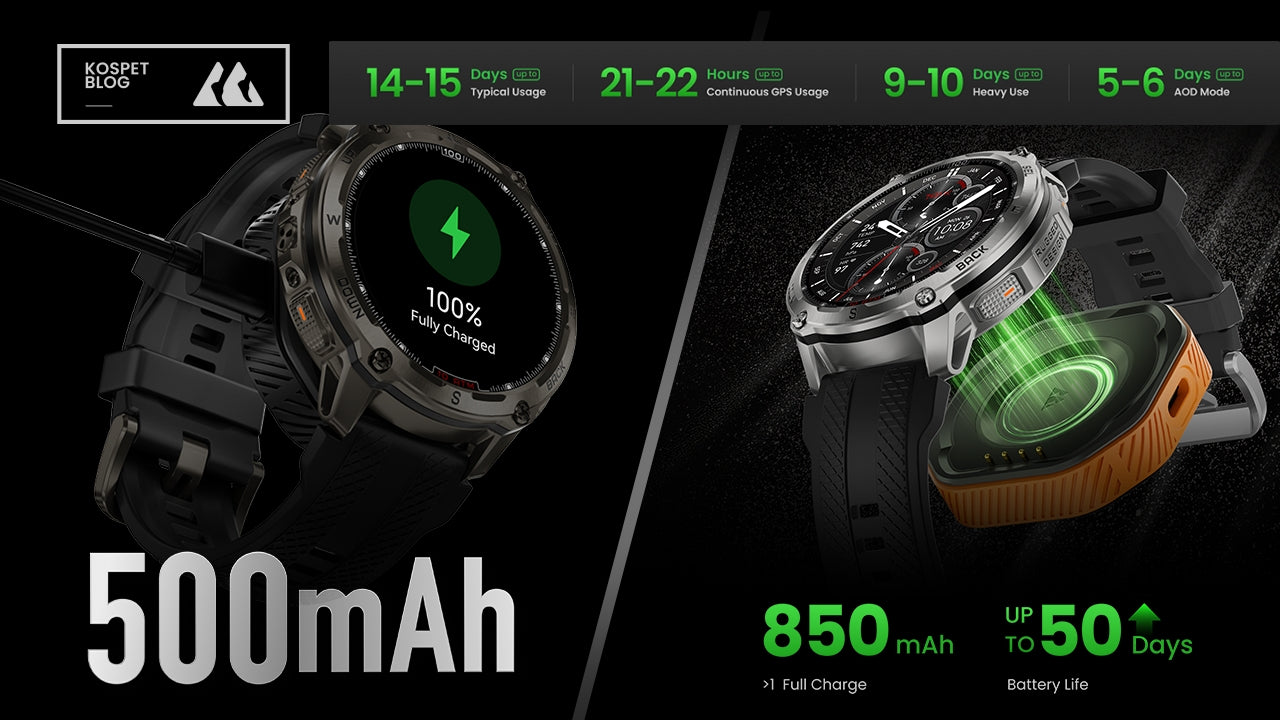
These are manufacturer-published estimates checked on October 16, 2026. All figures are stated as up to the listed duration. The product pages do not establish a shared test protocol across the three models, so this is a specification comparison rather than a controlled endurance ranking.
| Model | Typical use | Heavy use | AOD | Continuous GPS |
|---|---|---|---|---|
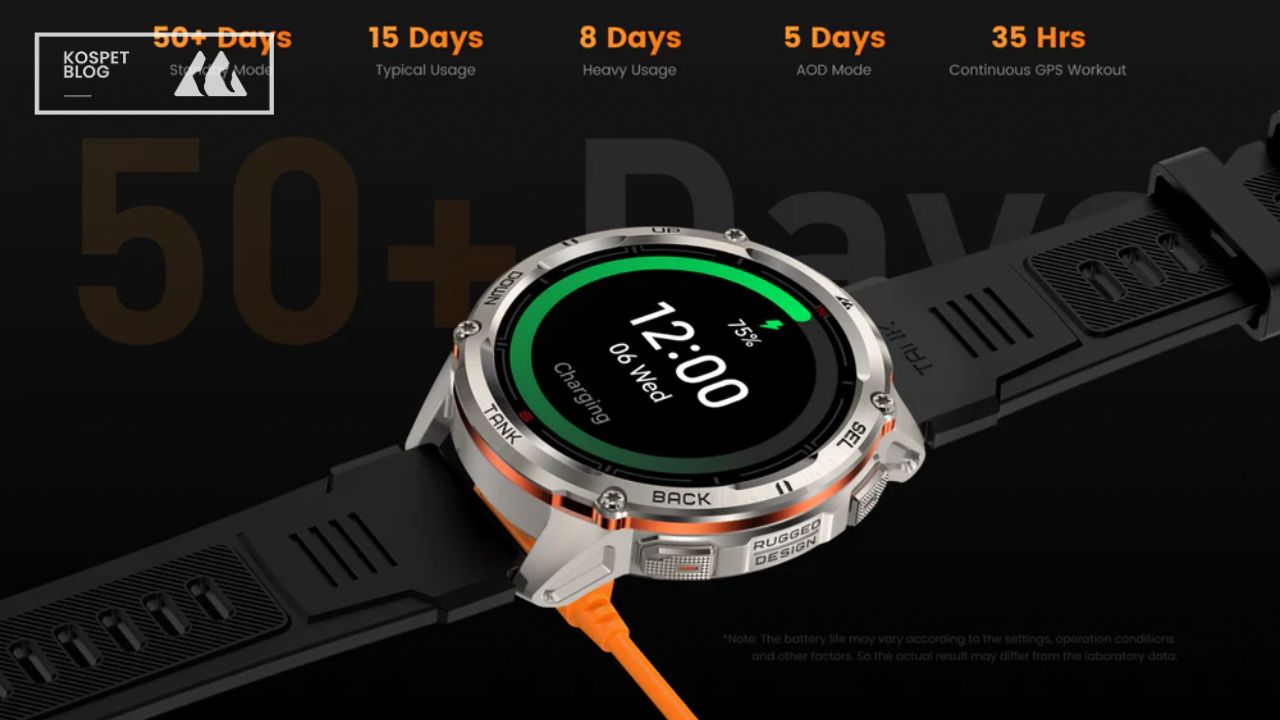
| KOSPET TANK T4C | 15 days | 10 days | 5 days | 21 hours |
| KOSPET TANK T4 Special Edition | 15 days | 10 days | 6 days | 22 hours |
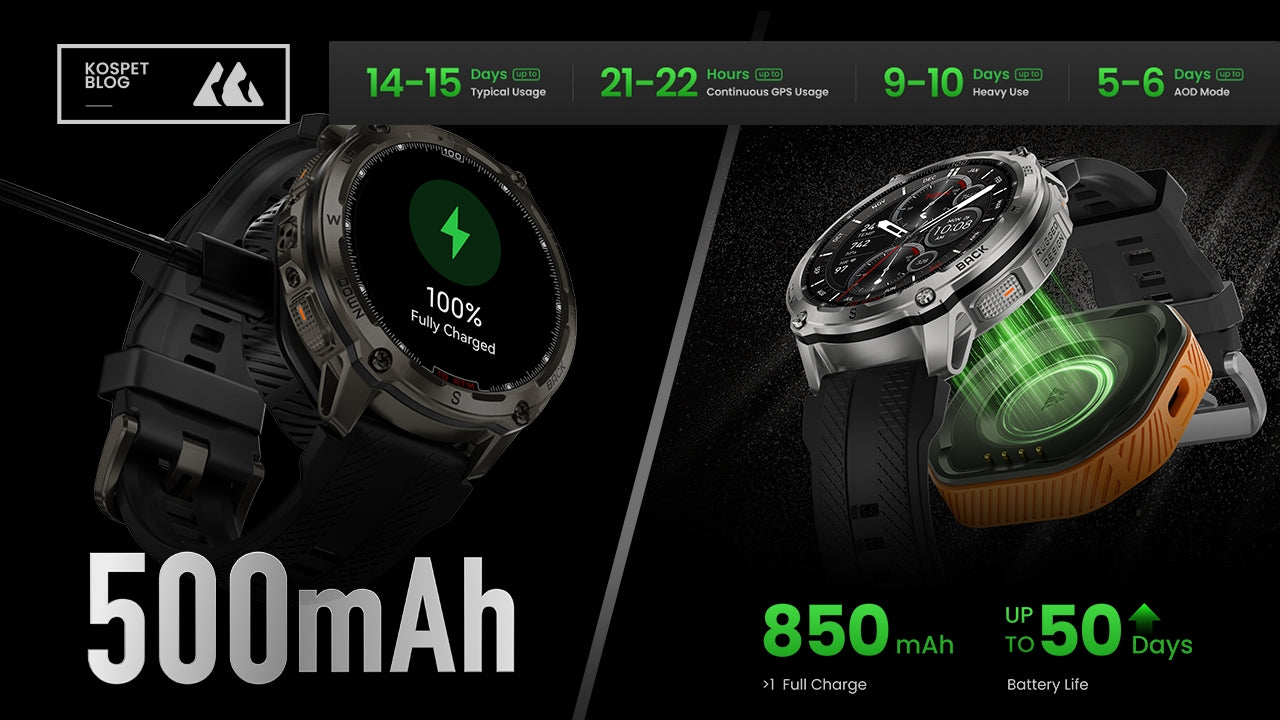
| KOSPET TANK M4 | 14–15 days | 9–10 days | 5–6 days | 21–22 hours |
Two conclusions matter more than the headline numbers. First, typical-use endurance is very similar, so it gives little reason to choose one model over another. Second, none of these models lists seven days in AOD mode. If a continuously visible screen and weekly charging are both essential, plan for a shorter charging interval or compare watches with a longer published AOD rating.
The one-hour difference between the listed GPS estimates is also too small to establish a meaningful real-world winner without equivalent testing. Navigation features and the demands of your trip deserve more attention.
Top Rugged Smartwatches for Different Battery Needs
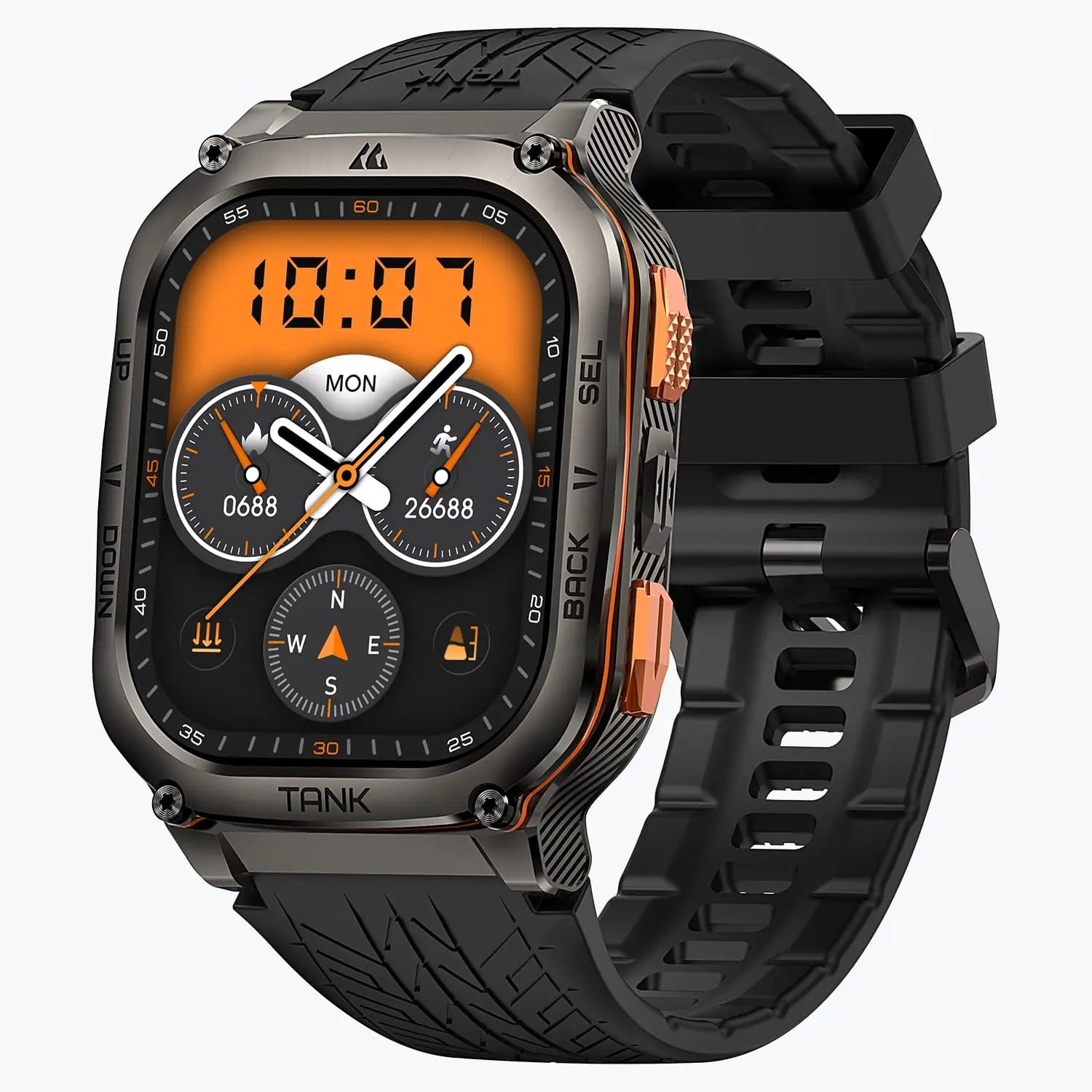
KOSPET TANK T4C for Workdays That Leave Little Time to Charge
After a long shift, putting your watch on the charger is easy to forget. Leaving it there overnight can also mean missing the sleep record you wanted. If this happens regularly, a watch that gives you more flexibility about when to charge is worth considering.
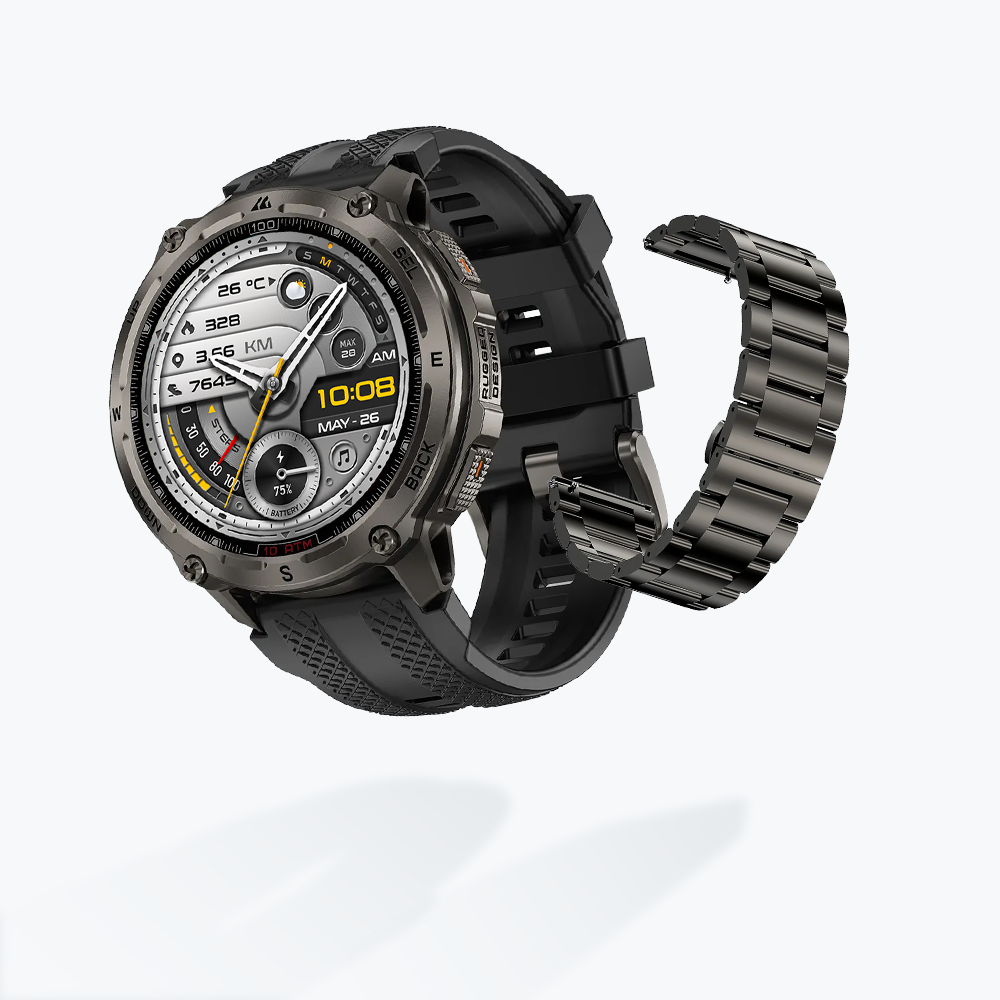
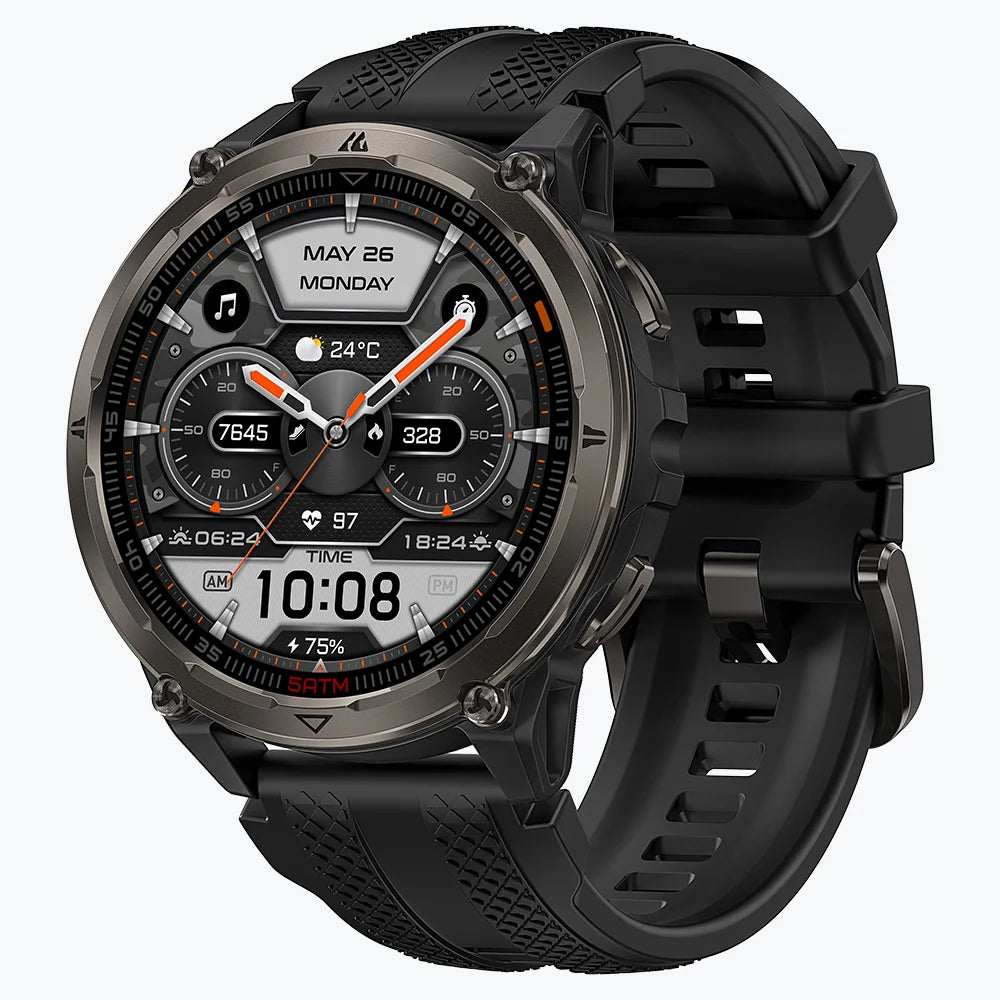
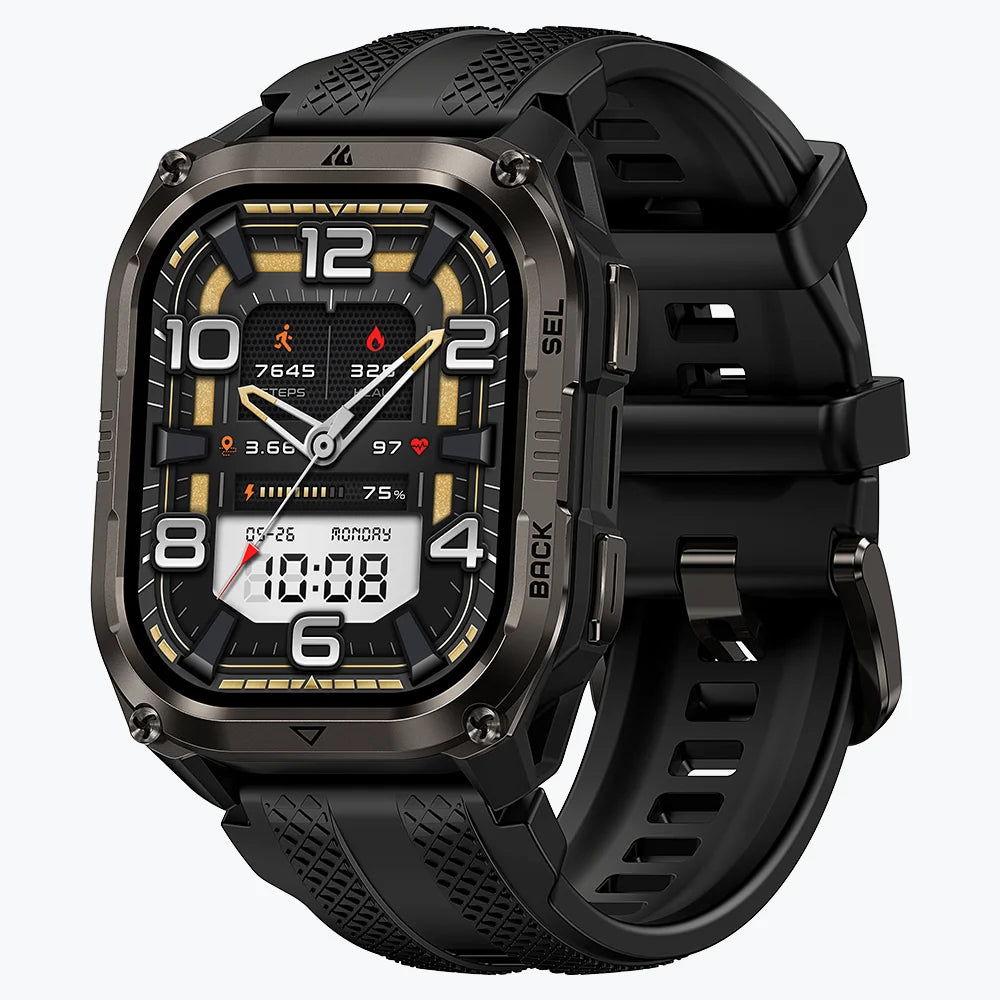
The TANK T4C’s 500mAh battery is rated for up to 15 days of typical use or ten days of heavy use. That gives you scope to fit charging around a convenient break instead of making it a nightly task. Its built-in LED flashlight also puts a light on your wrist for finding something in a dark bag or checking a dim corner without reaching for your phone.
Choose the relevant battery estimate for your settings; keeping the display always on has a separate five-day rating.
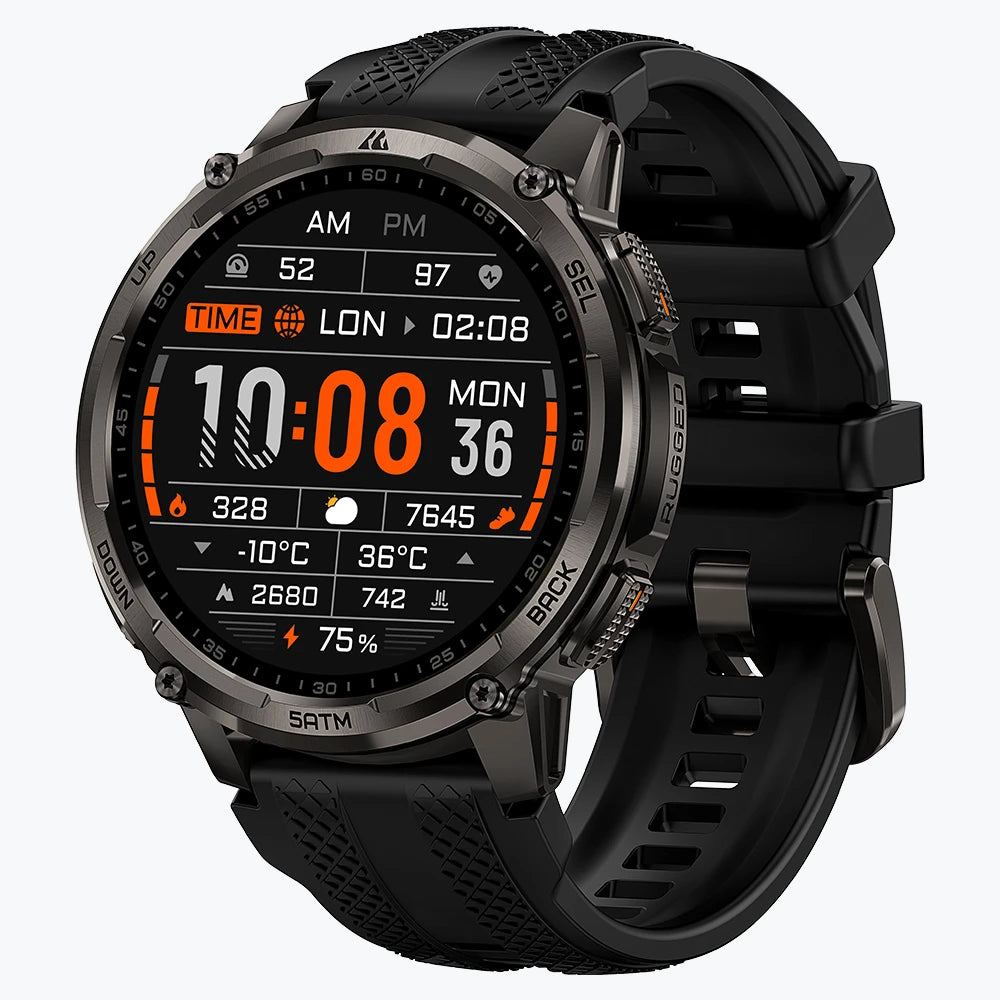
KOSPET TANK T4C Smartwatch
159,99 €EUR
KOSPET TANK T4 Special Edition for Checking Your Route Without Mobile Coverage
An unfamiliar trail junction is a poor place to discover that your map still needs to download. If your navigation depends on loading map data along the way, patchy mobile coverage can interrupt the route check just when you need it.
The TANK T4 Special Edition lets you download offline maps before departure and import a planned GPX or KML route. You can then check that route on your wrist without relying on mobile data. The practical benefit is having the map ready at the junction, rather than waiting for a connection to return.
Its published continuous GPS estimate is up to 22 hours. Use that figure to plan your recording time, especially when the hike involves frequent navigation checks. Maps must be downloaded in advance, and longer trips may still require a charging stop.
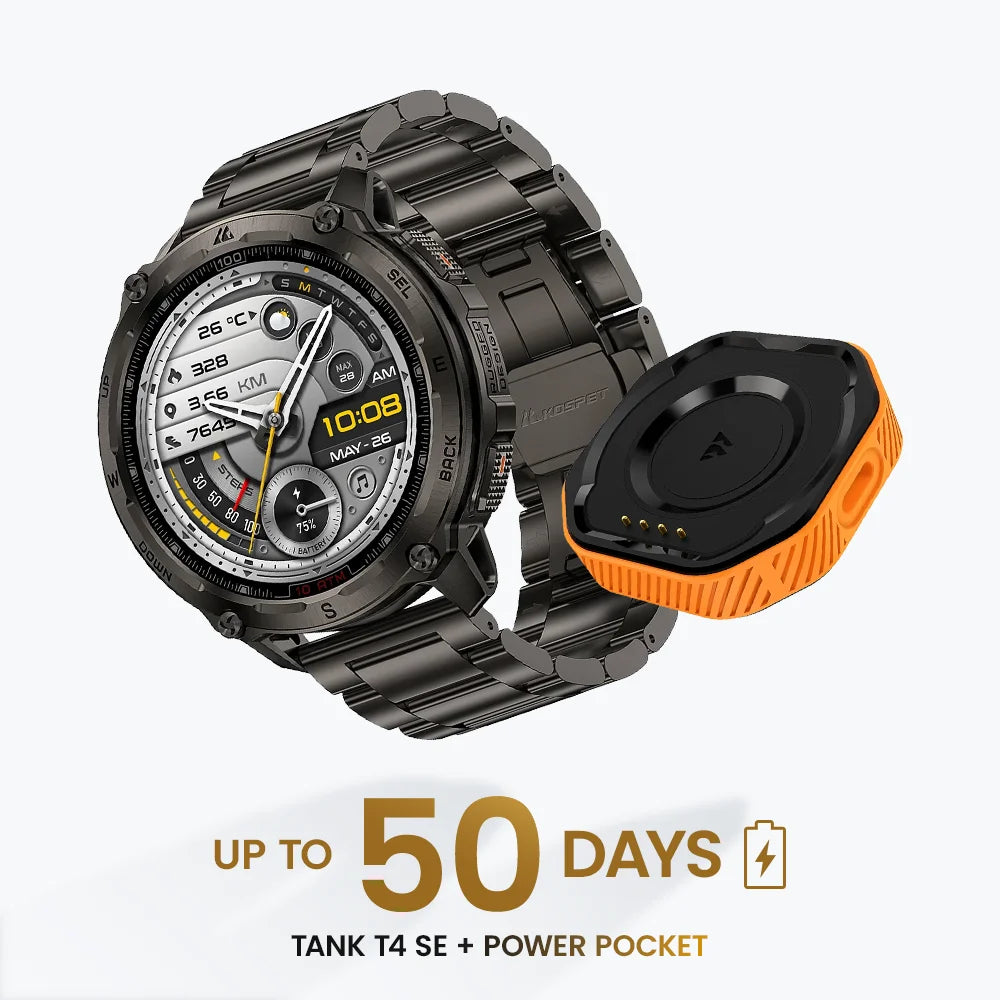
KOSPET TANK T4 Special Edition Smartwatch
199,99 €EUR
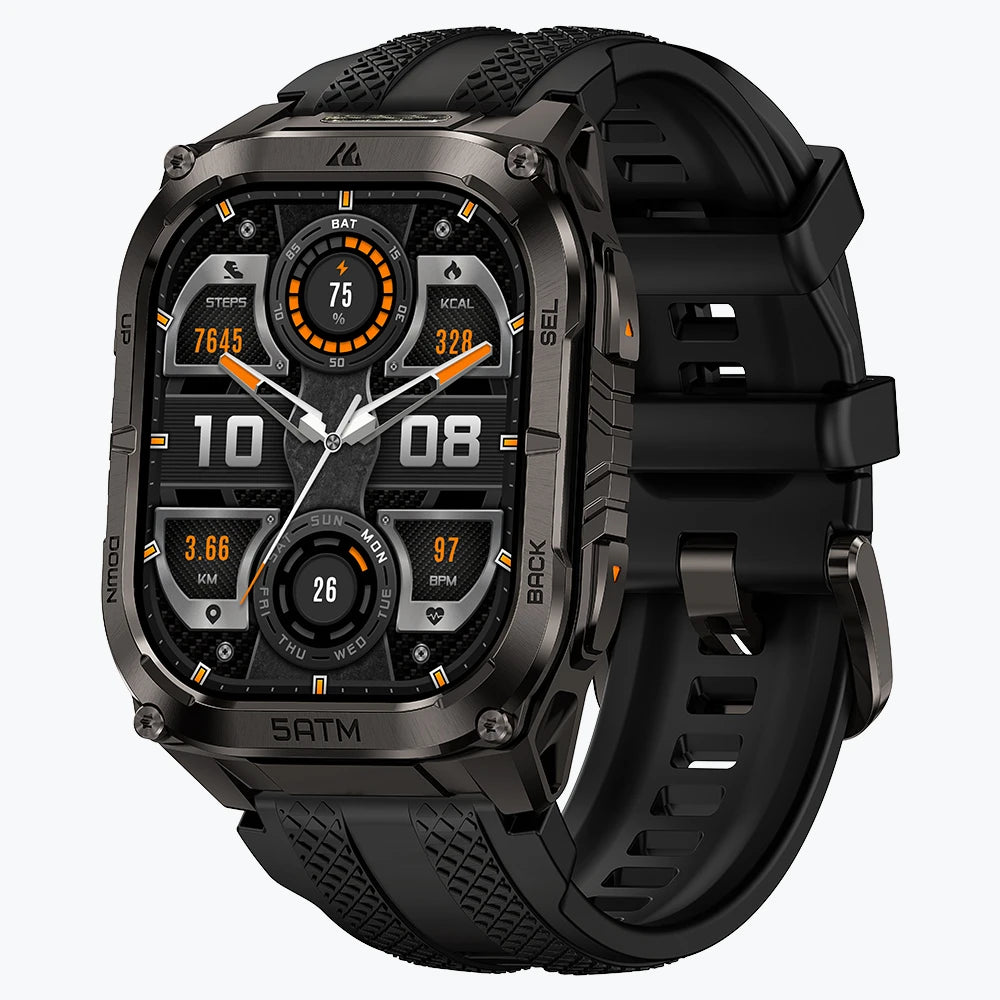
KOSPET TANK M4 for Trips With Limited Access to Charging
On a camping trip or a remote work assignment, a low-battery warning creates a different problem: there may be no convenient socket until you get home. A longer-lasting watch helps, but having a practical way to recharge can matter just as much.
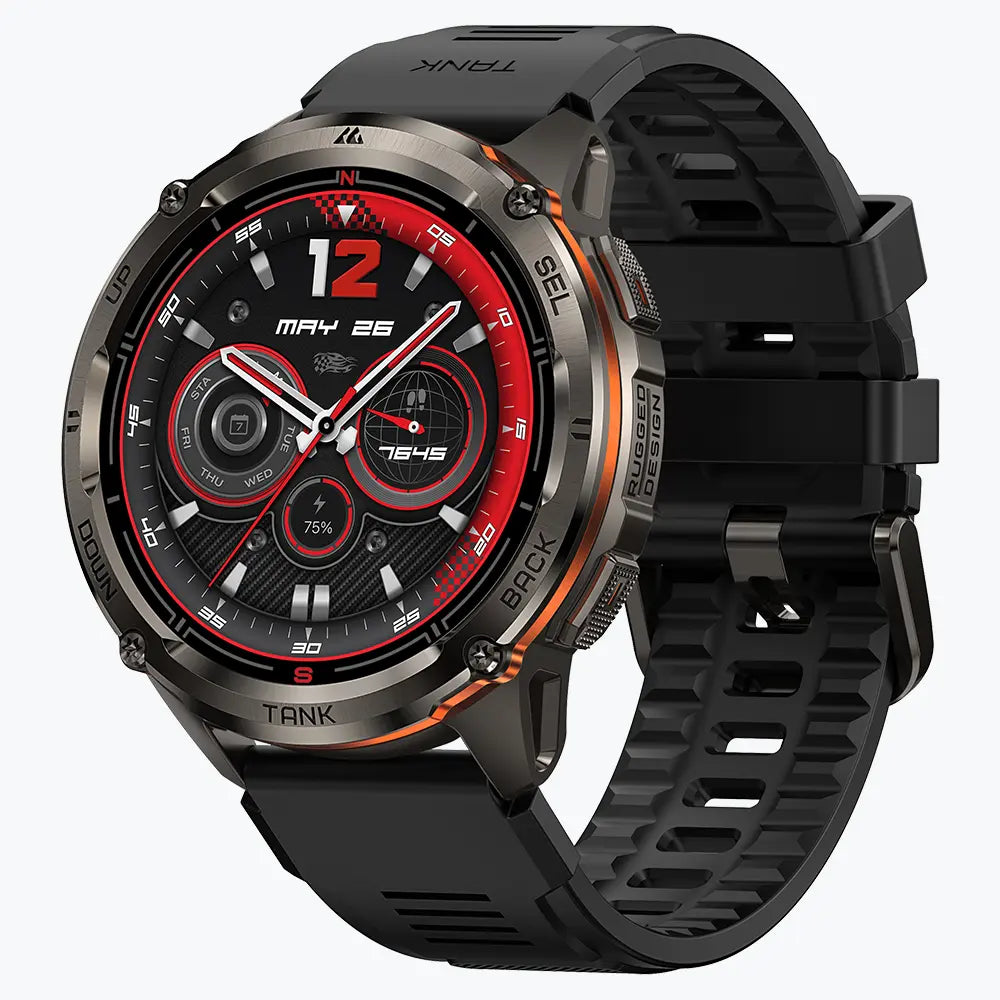
The TANK M4 offers up to 15 days of typical use and supports a matching portable Power Pocket. KOSPET states that the 850mAh accessory provides more than one full watch charge. Packed in advance, it lets you recharge during a meal or rest stop without finding a mains socket.
For a trip with long GPS sessions, use the M4’s 21–22-hour continuous GPS estimate to decide when that recharge may be needed. This gives you a way to plan additional use beyond the initial charge. The Power Pocket is sold separately, so check whether your selected bundle includes it.
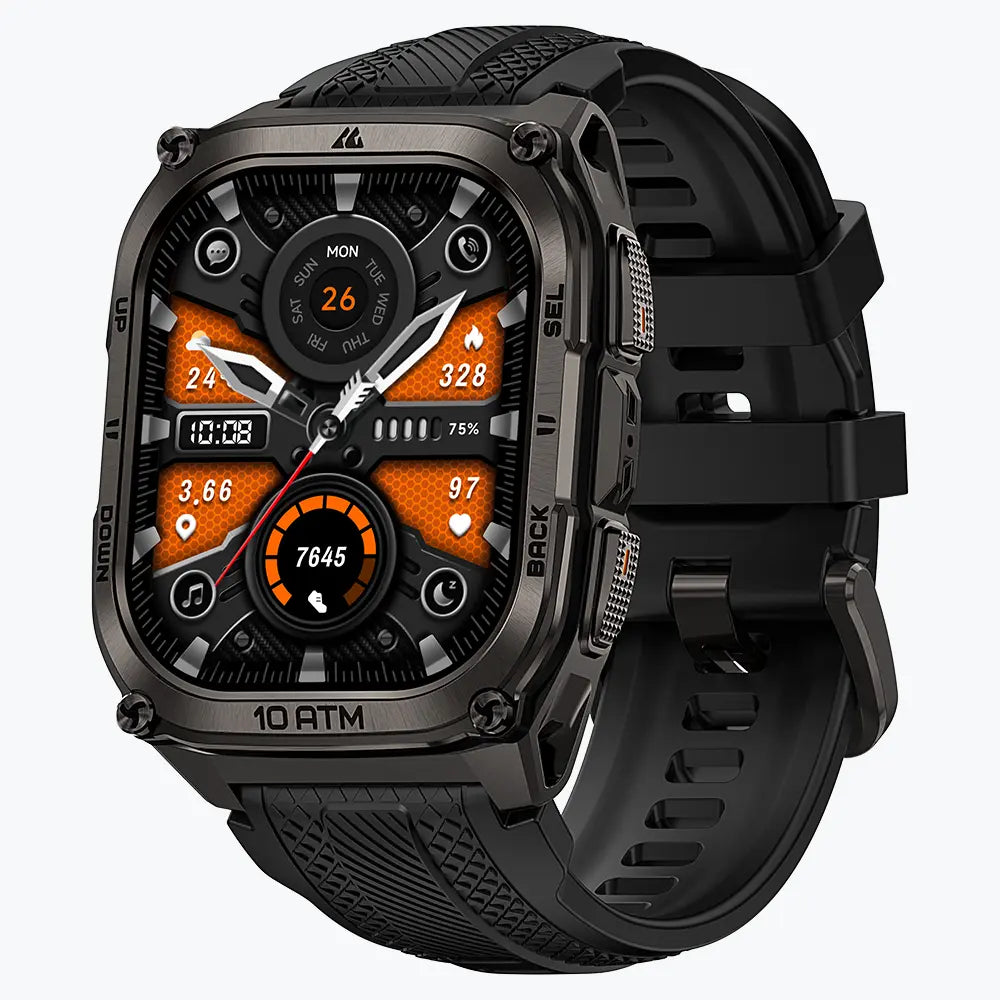
KOSPET TANK M4 Smartwatch
209,99 €EUR
Will the Battery Cover Your Whole Trip?
A watch that handles a day hike may need a charging stop on a longer route. Work out the hours you expect to record before using a typical-use claim to judge trip readiness.
| Example itinerary | GPS recording needed | How to read the specification |
|---|---|---|
| Two days with six hours of recording per day | 12 hours | Below the listed GPS maxima, but that alone cannot confirm the whole weekend will fit. Overnight use, navigation, conditions, and settings also consume power. |
| Three days with eight hours of recording per day | 24 hours | Exceeds every listed continuous GPS estimate in this comparison. Plan a recharge or compare a model rated for a longer recording workload. |
These are planning calculations, not test results. Do not add typical-use days to continuous GPS hours: both draw from the same battery. There is also no reliable conversion from a published GPS estimate to your exact mixture of hiking, map viewing, and overnight tracking.
A compatible portable charger can make a longer itinerary more practical, but that introduces a recharge. When comparing bundles, separate the watch’s single-charge endurance from the extra power supplied by an accessory.
Check What Rugged Protection Actually Covers
Battery life matters alongside protection suited to your activity. Check the exact model’s permitted water activities and operating temperatures. A pressure rating is not permission to dive to the equivalent depth, and environmental testing does not guarantee unchanged battery performance in every condition.
For work, prioritize documented protection against the conditions you face. For hiking, check navigation features and recording endurance together. A tougher case cannot compensate for insufficient power on the route you plan to record.
Practical Steps to Extend Battery Life
For model-dependent settings and adjustment instructions, follow KOSPET’s official guide to balancing smartwatch features and battery life.
FAQs
Why Might a Two-Week Watch Need Charging Sooner?
Typical-use figures describe a particular workload. Always-on display, GPS recording, navigation, and frequent measurements change that workload. Compare the estimate for the features you actually keep enabled rather than treating the longest figure as a universal result.
Does a Longer Standby Claim Help With Hiking?
Standby and power-saving modes use a different feature set from active outdoor recording. For hiking, use continuous GPS estimates and check what navigation functions remain available in any reduced-power mode.
Does Cold Weather Affect Battery Planning?
Yes. Cold conditions can reduce battery endurance even when the watch is designed for outdoor use. Follow the model’s operating and charging limits, and leave more margin for winter trips.
Choose Around the Features You Want to Keep
For fewer interruptions during work and daily activity, start with typical and heavy-use figures. For an always-visible screen, check AOD endurance. For hiking, total your GPS hours and decide where charging can fit. Then open the product options above to compare the KOSPET design and outdoor features that suit your routine.





Leave a comment
This site is protected by hCaptcha and the hCaptcha Privacy Policy and Terms of Service apply.