



Yes. KOSPET currently has four clear answers in its rugged smartwatches: TANK T4 for outdoor navigation, TANK T4C for demanding work, TANK T3 ULTRA 2 for long GPS sessions, and ORB 2 for affordable everyday and weekend use.
All four pair a 1,000-nit AMOLED screen with published protection and battery data. The right model depends on where failure would matter most: on an unfamiliar trail, during a long workout, at work, or in rough daily wear.
Durable Smartwatches with Bright AMOLED Displays: The Shortlist
| Model | Most suitable use | Relevant features and ratings | Main compromise |
|---|---|---|---|
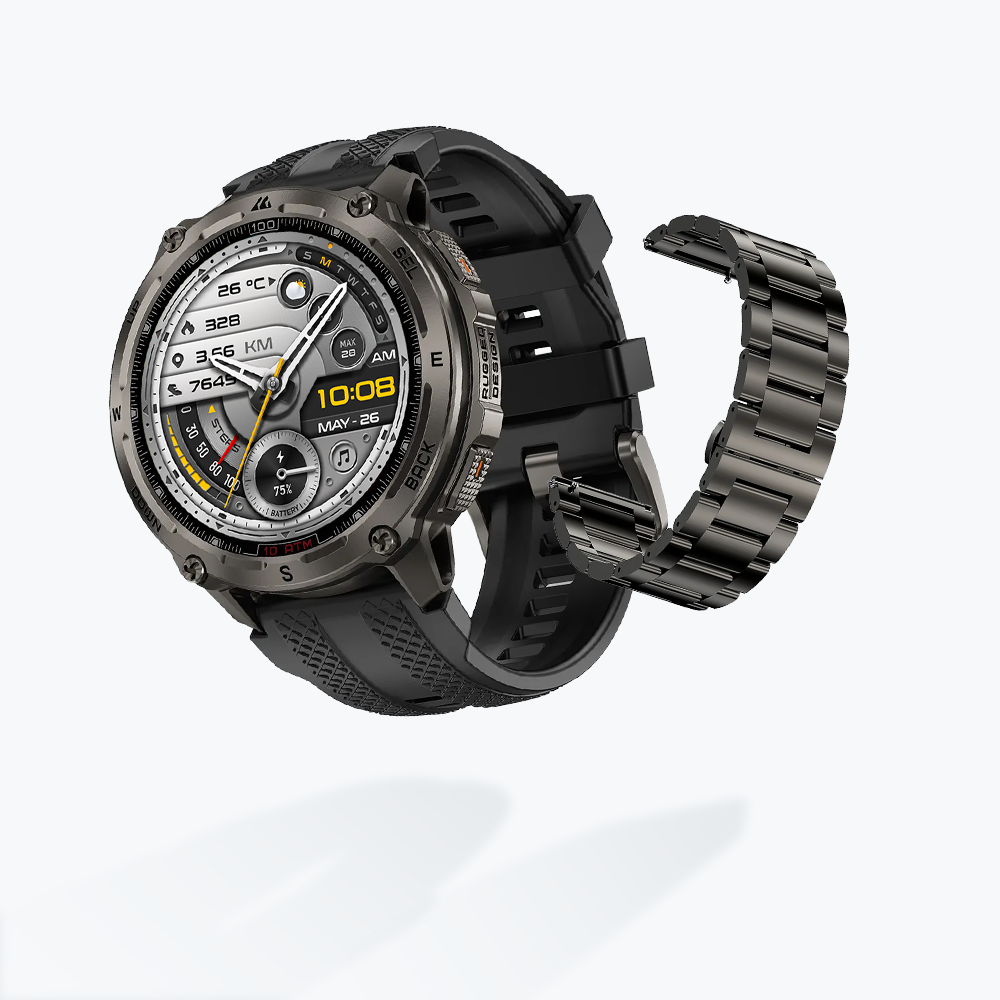
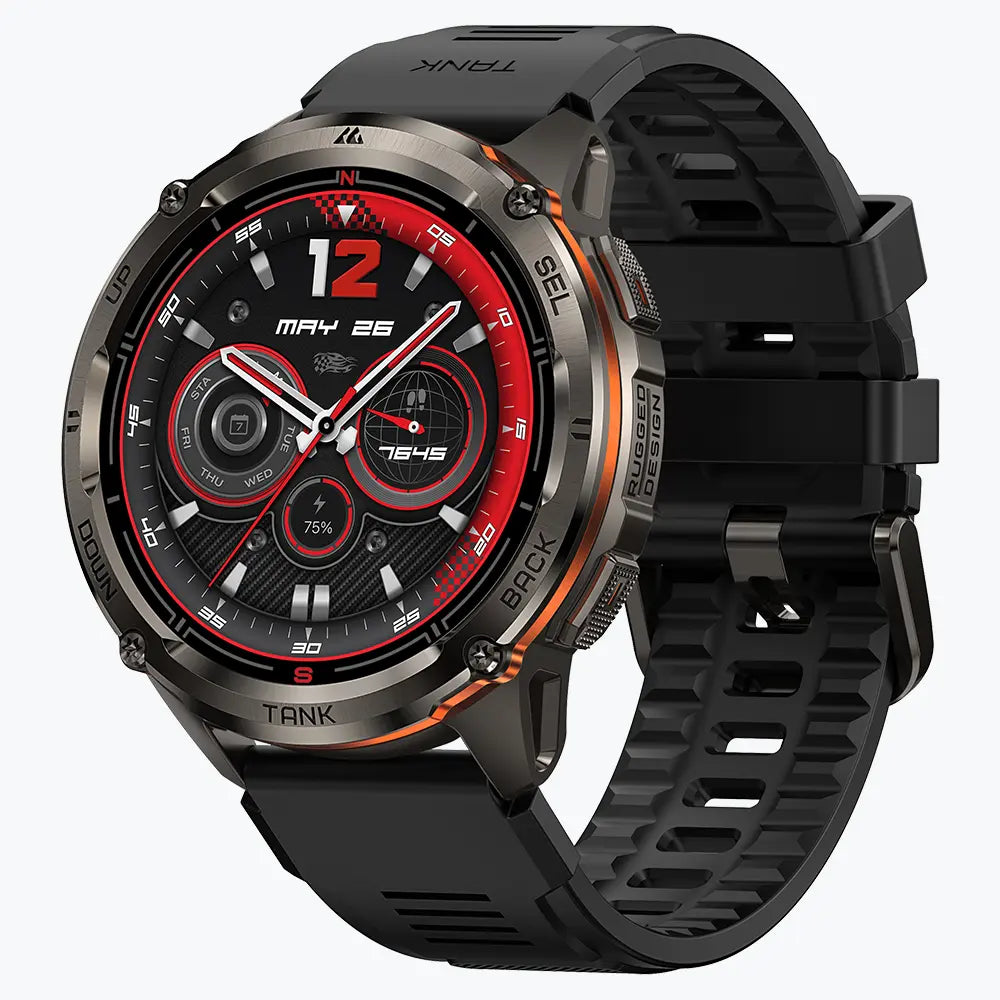
| TANK T4 | Hiking, trail running, cycling, unfamiliar routes | Offline maps, auto-brightness, 20 MIL-STD-810H tests, 10 ATM/IP69K, 21–22 hours GPS | Costs more than the other three models and has shorter GPS runtime than T3 ULTRA 2 |
| ORB 2 | Commuting, daily work, running, camping, weekend outdoor use | 12 SGS-tested MIL-STD-810H procedures, 5 ATM/IP69, Corning Gorilla Glass, 16-day typical-use and 25-hour GPS claims | No offline maps or specialist navigation; not intended for diving |
| TANK T4C | Construction, field service, farming, long outdoor shifts | 5 ATM/IP69K, flashlight, short-range communication, 15-day typical-use claim | The current product page does not name its cover-glass material |
| TANK T3 ULTRA 2 | Day hikes, known trails, running, long GPS activities | 15 MIL-STD-810H certifications, 5 ATM/IP69K, Gorilla Glass 3, 35-hour GPS claim | No full offline maps; no ambient-light sensor is listed |
KOSPET’s battery life separates typical use, AOD, and continuous-GPS figures, which makes it more useful than a single maximum battery number.
What Should You Check in a Durable AMOLED Smartwatch?
Check Which Conditions Were Actually Tested
MIL-STD-810H is a collection of environmental test methods, not one universal toughness test. Manufacturers can evaluate products against procedures for shock, vibration, temperature, humidity, rain, sand, dust, and other stresses. For a buyer, a useful claim should identify the procedures performed and, ideally, the laboratory that conducted them.
- A named list of relevant tests provides more information than the words “military-grade.”
- Tests for shock and vibration matter more for worksites and rough trails; temperature, rain, and dust testing matter more for extended outdoor use.
- Results describe performance under the stated laboratory conditions. They do not make the watch immune to every fall or impact.
Read ATM and IP Ratings Together
ATM and IP ratings measure different forms of protection.
| Marking | What it helps assess | What to check before use |
|---|---|---|
| 5 ATM | Resistance to water pressure during the stated laboratory test | Confirm that the manufacturer permits swimming; it is not a diving rating by itself |
| 10 ATM | A higher water-pressure rating than 5 ATM | Follow the stated activity and depth limits rather than assuming it suits every dive |
| IP69 or IP69K | Protection against dust and forceful water jets | Useful around dust, mud, and spray, but it does not specify a safe diving depth |
A watch carrying both an ATM and an IP rating provides information about different risks. The ATM rating helps with immersion and pressure decisions; the IP rating helps with dust and water ingress. Hot showers, saunas, diving, and high-speed water activities still require specific approval from the manufacturer.
Evaluate Screen Protection and Outdoor Readability Separately
The screen has two jobs: resist damage and remain readable. Cover-glass material, bezel design, and display brightness address different parts of that problem.
- Cover glass: A named material gives the buyer something specific to evaluate. Corning reports improved scratch resistance for Gorilla Glass 3, but strengthened glass can still be marked by sand, stone, or metal.
- Bezel and case: A raised bezel can reduce direct contact with the screen, while a reinforced case helps absorb impacts around it. Case durability does not automatically make the display scratch-proof.
- Outdoor visibility: A 1,000-nit AMOLED display is a useful starting point for sunlight readability. Automatic brightness, reflections, text contrast, and viewing angle also determine how quickly information can be read outside.
The strongest option is therefore not simply the watch with the highest water rating or brightest screen. It is the model whose impact protection, water and dust ratings, cover glass, and outdoor visibility all match the conditions in which it will be worn.
Which KOSPET Durable Smartwatch Fits Each Use Case?
For Unfamiliar Trails and Rapid Light Changes: TANK T4
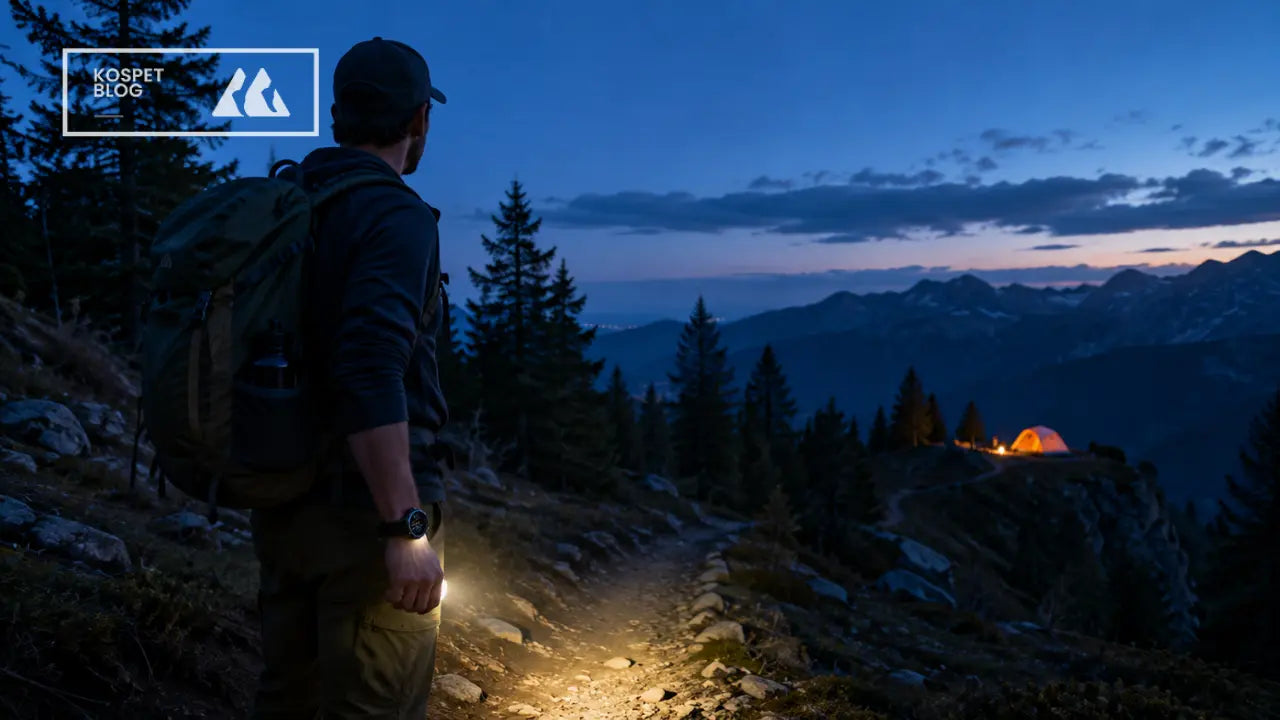
An unfamiliar trail can shift from shaded forest to an exposed ridge while rain, branches, and rock contact put the watch at risk. TANK T4 is suited to users who need navigation to remain visible and usable through those changes.
- Its reinforced construction and weather protection address impacts, dust, and rain, while the adaptive AMOLED display keeps route information easier to read as ambient light changes.
- Offline maps and positioning tools give that bright screen a practical purpose: making route decisions without repeatedly reaching for a phone. T4 is the clearest recommendation when navigation—not only activity recording—is central to the trip.
For Daily Wear and Occasional Outdoor Exposure: ORB 2
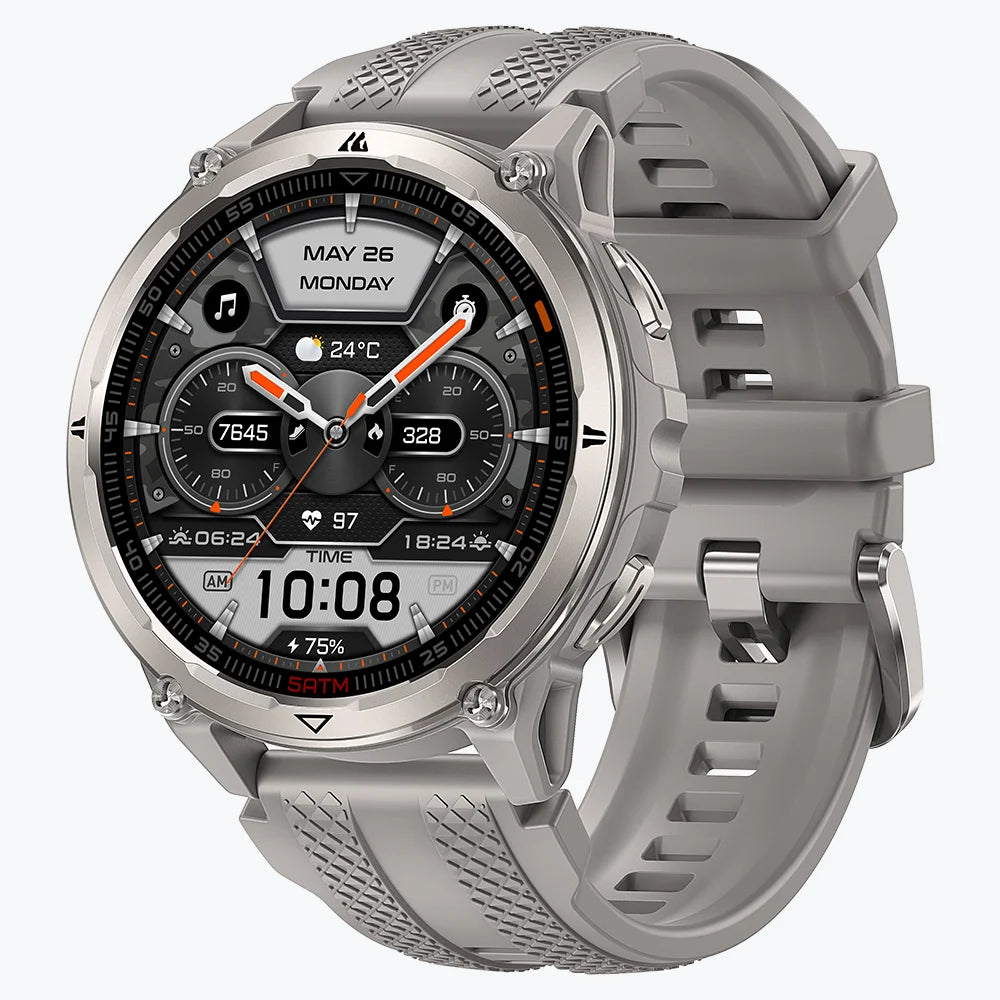
KOSPET ORB 2 Smartwatch
79,99 €EUR
A daily watch may hit doorframes or gym equipment during the week, then face rain and direct sunlight on a weekend outing. ORB 2 fits buyers who need both everyday wearability and added protection without moving to a specialist navigation watch.
- Its protected body and cover glass are intended for common knocks and changing weather, while the bright AMOLED display keeps messages, workout data, and route records clear across indoor and outdoor settings.
- Built-in positioning, lighting, and nearby voice communication make the durability useful beyond damage resistance. ORB 2 is the practical recommendation when one watch must cover workdays, exercise, and occasional outdoor trips.
For Worksites with Impacts, Dirt, and Uneven Lighting: TANK T4C
On a worksite, a watch may contact tools, machinery, dust, or water and still need to be read in an open yard or a dim service area. TANK T4C is designed for situations where a fragile case and a difficult-to-read screen would be equally limiting.
- Its rugged housing and sealing protect the watch during physical work, while the high-brightness AMOLED display keeps time, alerts, direction, and other data visible outdoors.
- The flashlight and nearby voice communication extend that combination into darker spaces and hands-busy tasks. T4C is the strongest fit when the smartwatch needs to function as a work tool rather than only a fitness tracker.
For Long Activities on Rough but Familiar Routes: TANK T3 ULTRA 2
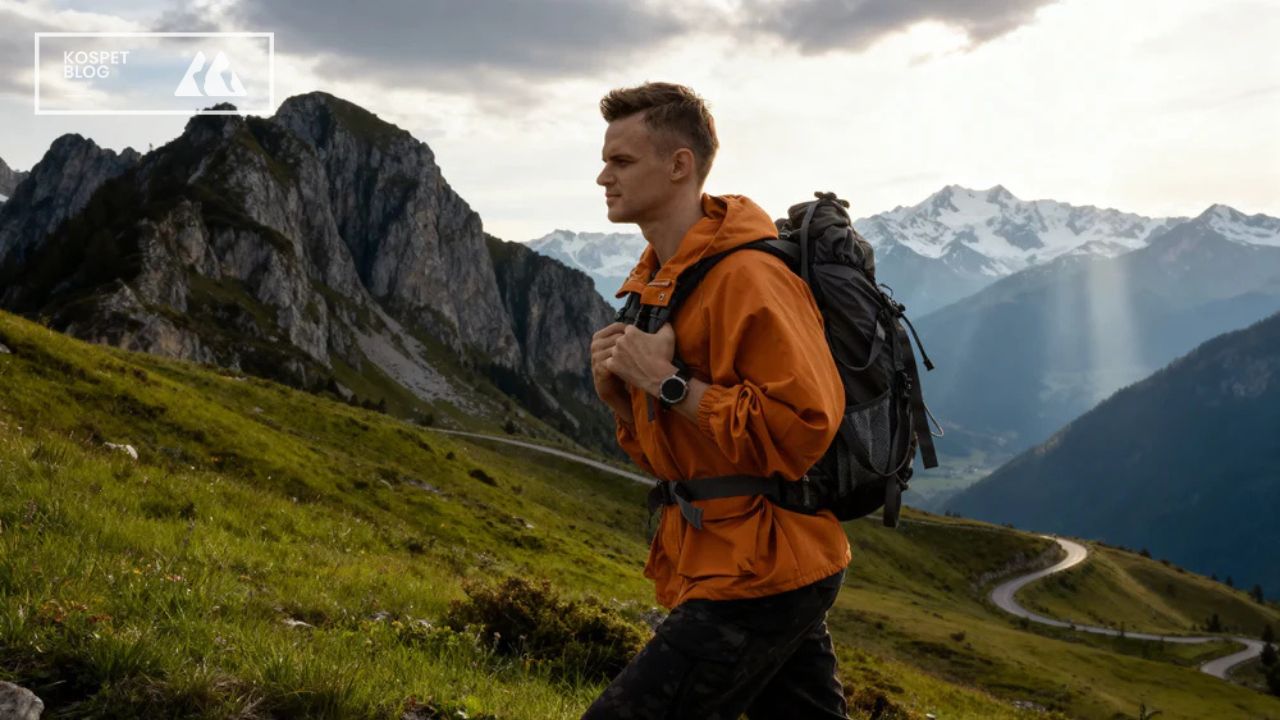
Long hikes, trail runs, and marked routes expose a watch to sweat, rain, brush, and direct sun for hours. TANK T3 ULTRA 2 fits users who need the screen, case, and activity recording to remain useful throughout an extended session.
- Its rugged exterior and protected glass reduce the risk of damage, while the bright AMOLED display makes pace, elevation, direction, and Route Back cues easier to check outdoors.
- Its longer GPS endurance supports the same durability-and-visibility combination over more hours. T3 ULTRA 2 is the better recommendation when completing a long activity record matters more than viewing detailed maps on the wrist.
FAQs
Is 1,000 Nits Enough in Bright Sunlight?
A 1,000-nit peak is a reasonable starting point for checking workout data outdoors, but it is a manufacturer-rated maximum rather than an independent sunlight test.
T4 strengthens the case with an ambient-light sensor; the T4 display specification shows why automatic adjustment is useful when light changes quickly. Screen layout, reflections, and viewing angle still affect what the wearer sees.
Does AMOLED Brightness Cut Battery Life Too Far?
The larger penalty comes from how long the display and GPS remain active, not from the peak-brightness number alone.
KOSPET’s battery figures place these models at roughly five to six days in AOD mode and 21–35 hours with continuous GPS. T3 ULTRA 2 has the longest published GPS runtime in this group, while ORB 2 balances a 25-hour GPS claim with up to 16 days of typical use. T4’s shorter GPS figure should be weighed against the value of its offline maps.
Can a Durable Smartwatch Replace a Phone Outdoors?
Only for specific tasks. A watch can keep route guidance, activity recording, quick lighting, or nearby voice communication on the wrist, which reduces how often the phone needs to come out.
It does not replace emergency calling, detailed rerouting, current weather information, or a second navigation method. Treat the watch as the first-access tool and the phone as the backup for situations with greater consequences.



Lascia un commento
Questo sito è protetto da hCaptcha e applica le Norme sulla privacy e i Termini di servizio di hCaptcha.