



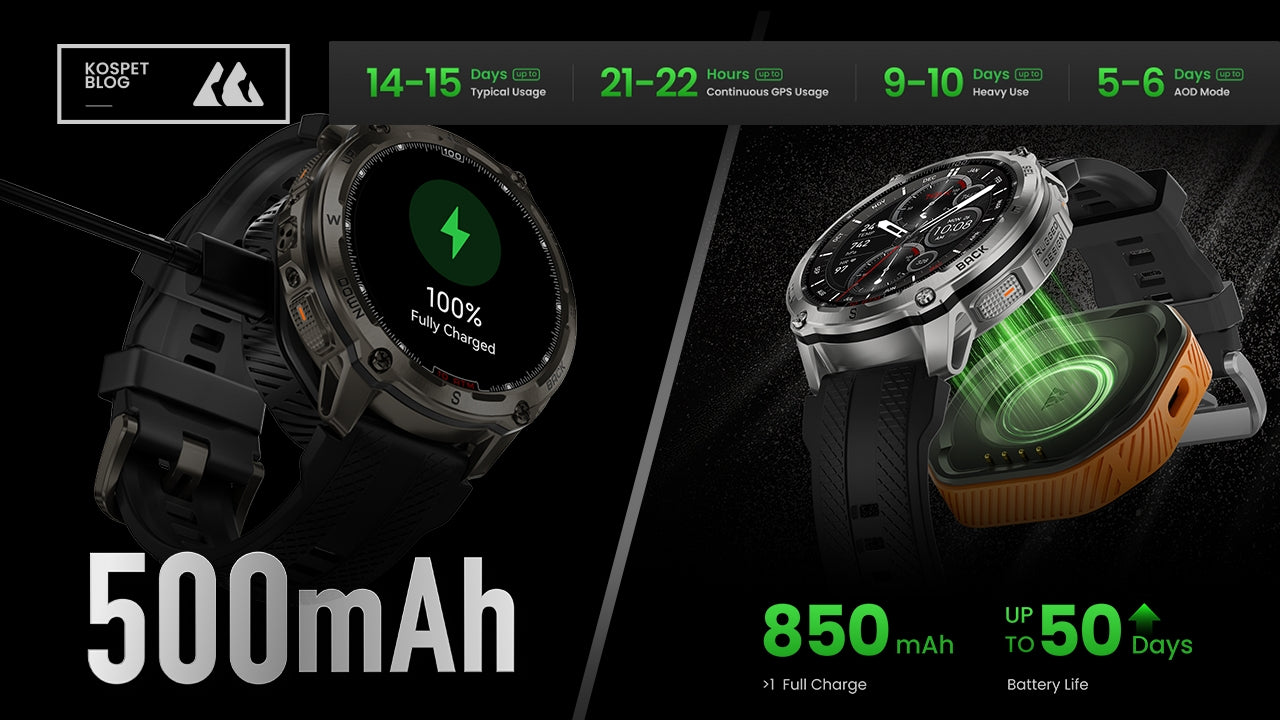
A smart watch with long battery life should make daily wear easier, not more complicated. Most users looking for this type of watch are not trying to study battery technology. They want a watch that does not become another device to charge every night.
The right long-battery smart watch depends on the way the watch will be worn most often. A daily user needs fewer charging interruptions. A runner needs GPS endurance. A field worker needs battery life that still works during long shifts. A traveler needs more confidence away from a charger.
That is why the best choice is not always the watch with the largest battery number. The better choice is the watch that removes the biggest battery problem from the user's routine.
Choose by the Way You Wear the Watch
The first step is not comparing battery numbers. The first step is knowing what kind of long-battery experience the user needs.
| Main Use | What the User Needs | Wrong Way to Choose | Better Direction |
|---|---|---|---|
| Daily wear | Fewer charges, sleep tracking, stable alerts | Choosing by standby time | long battery smart watch for daily wear |
| Running and hiking | Enough GPS time to finish routes | Choosing by daily battery only | GPS running watch |
| Work and field use | Battery life plus durability and screen visibility | Choosing by battery alone | durable smart watch for work |
| Travel and outdoor days | Multi-day use away from chargers | Choosing by feature count only | outdoor smart watch with long battery life |
| Always-On Display | A screen that stays visible without daily charging | Judging by typical use only | Always-On Display battery life |
| Lightweight sports | Long wear without a heavy rugged body | Overbuying a bulky watch | lightweight long battery smart watch |
This table is the main decision path. The user should first identify the wearing scenario, then use battery numbers to confirm the choice.
Match Your Use Case to the Right Watch Type
Long battery life has different meanings across different watch types. The right type depends on whether the user needs daily comfort, GPS tracking, rugged use, a larger display, or lighter sports wear.
Everyday Long-Battery Smart Watch
An everyday long-battery smart watch is for users who want less charging pressure during normal life. The priority is not extreme outdoor tracking or heavy-duty construction use. The priority is stable wear across notifications, health tracking, light workouts, and sleep tracking.
This type should feel comfortable enough for all-day use and reliable enough for overnight wear. The watch should support a normal routine without turning charging into a daily habit.
Best fit: long battery smart watch for daily wear.
GPS and Outdoor Long-Battery Smart Watch
A GPS and outdoor long-battery smart watch is for users who record routes, run outside, hike, cycle, or train away from indoor charging habits. The priority is not the largest daily-use number. The priority is tracking endurance.
Outdoor users need the watch to finish the route, save the data, and stay readable during movement. A watch can last many days in normal use and still be the wrong choice for long GPS sessions.
Best fit: smart watch GPS battery life and GPS running watch.
Rugged Long-Battery Smart Watch
A rugged long-battery smart watch is for users who need the watch to stay useful in tougher environments. Work users, field workers, and outdoor job users need more than a long battery claim.
The watch also needs a durable body, readable screen, practical buttons, water and dust resistance, and useful tools such as a flashlight or SOS support. Battery life matters because the watch must stay available during long shifts, not because it looks strong in standby mode.
Best fit: durable smart watch for work.
Large-Screen Long-Battery Smart Watch
A large-screen long-battery smart watch is for users who want easier reading during long wear. Screen size is not only a design preference. It changes how quickly the user can read alerts, activity data, health information, and work reminders.
The better choice should balance readability with endurance. A larger screen is more useful when the battery profile still supports long daily wear.
Best fit: large screen smart watch with long battery life.
Lightweight Long-Battery Sports Watch
A lightweight long-battery sports watch is for users who want daily sports tracking without a heavy rugged design. This type fits casual running, gym use, health tracking, and normal smart watch functions.
Some users do not need a work-style or outdoor-heavy watch. They need long battery life in a lighter design that feels easier to wear every day.
Best fit: lightweight long battery smart watch.
Use Battery Numbers as Proof, Not as the Starting Point
Battery numbers should confirm the decision. They should not replace the decision. The user should first choose by use case, then check the battery metric that proves the watch can handle that use case.
| Use Case | Battery Number to Check | What It Proves |
|---|---|---|
| Daily wear | Typical use | The watch can support normal alerts, health tracking, sleep tracking, and screen checks. |
| Active days and work | Heavy use | The watch can handle more alerts, screen checks, sensors, workouts, and active features. |
| Running and hiking | GPS battery | The watch can track outdoor routes continuously and save complete activity data. |
| Always-On Display | AOD battery | The screen can stay visible without turning the watch into a daily charging task. |
| Low activity | Standby time | The watch can last in low-power mode, but this does not represent normal daily wear. |
The useful battery number is the one that proves
KOSPET Smart Watches with Long Battery Life
KOSPET long-battery smart watches cover different needs. The best choice depends on the main battery problem the user wants to solve: GPS tracking, long workdays, larger screen visibility, or lighter daily sports.
| Model | Best For | Battery Strength | Main Reason to Choose |
|---|---|---|---|
| TANK T4 | Running, trail, GPS-heavy outdoor training | Up to 14–15 days typical use, 21–22h GPS | Stronger fit for route tracking and outdoor training |
| TANK T4C | Workdays, outdoor jobs, rugged use | Up to 12–15 days typical use, 18–21h GPS | Better for long shifts, flashlight, SOS, and rugged use |
| TANK M4C | Large-screen work and outdoor use | Up to 13–16 days typical use, 18–21h GPS | Better for visibility and long wear |
| MAGIC P10 | Lightweight daily sports | Up to 12–13 days typical use, 15–16h GPS | Better for daily fitness and lighter wear |
TANK T4
Choose TANK T4 for GPS-heavy use. It makes the most sense for running, trail running, hiking, route tracking, and outdoor training.
Its advantage is balance. The watch supports strong daily battery life while also giving enough GPS endurance for longer outdoor sessions. That combination matters for users who train outdoors often and still want a watch that lasts through normal daily wear.
TANK T4 is more than a casual notification watch. It fits users who treat GPS, route data, and training features as part of the main reason to buy.
You can choose TANK T4 long battery GPS smart watch.
TANK T4C
Choose TANK T4C for long workdays and rugged daily use. It fits field workers, outdoor workers, and users who need a watch that feels more like a practical tool.
Its value comes from the combination of battery life and work utility. A rugged body, flashlight, SOS use cases, and outdoor readiness make it more suitable for demanding environments than a lightweight lifestyle watch.
TANK T4C works best for users who spend long hours away from a charger and need the watch to stay useful on the job.
You can choose TANK T4C rugged smart watch for long workdays.
TANK M4C
Choose TANK M4C for long battery life with a larger display. It fits users who want easier reading during work, outdoor activity, or daily tracking.
The larger screen supports quick glances at alerts, health data, workout information, and work reminders. For users who value visibility, the screen becomes part of the endurance experience because the watch remains easier to use throughout the day.
TANK M4C is strongest for users who want battery life, outdoor practicality, and readability in one watch.
You can choose TANK M4C long battery smart watch with large display.
MAGIC P10
Choose MAGIC P10 for lighter daily sports. It fits daily fitness, casual running, gym use, and normal smart watch functions without a heavy rugged look.
Its advantage is balance. The watch supports long daily wear while staying more suitable for users who prefer a lighter design.
MAGIC P10 works best for users who want fewer charging interruptions but do not need heavy-duty work features or extreme rugged styling.
You can choose MAGIC P10 long battery smart watch for daily sports.
How to Compare Long Battery Smart Watches Before Buying
The best long-battery smart watch is not the one with the longest number. It is the one whose strongest battery mode matches the user’s main routine.
| Buying Question | Better Way to Think About It |
|---|---|
| Daily wear or GPS use? | Daily users need typical use; outdoor users need GPS battery |
| AOD on or off? | Screen-on users need separate AOD battery life |
| Short workouts or long outdoor sessions? | Longer sessions need continuous GPS endurance |
| Desk work or field work? | Field work needs heavy-use battery and durability |
| Small screen or large display? | Larger displays improve readability but need efficient power use |
| App ecosystem or fewer charges? | More smart features often mean shorter endurance |
| Charging every night or every few days? | Charging habit should match the watch’s real battery profile |
| Indoor use or outdoor use? | Outdoor users also need brightness, GPS, water resistance, and durability |
This checklist turns the buying decision into a practical match. Daily users start with typical use. Outdoor users start with GPS. Work users start with heavy-use endurance and durability. AOD users start with screen-on battery life.
That is the clearest way to choose the best smart watch with long battery life.
FAQs
Can a long-battery smart watch replace a Wear OS watch?
A long-battery smart watch can replace a Wear OS watch for users who care more about battery life, health tracking, sports modes, outdoor use, and fewer charges. Wear OS is still stronger for third-party apps, payments, voice tools, and deeper phone integration.
Is AMOLED bad for smart watch battery life?
AMOLED is not automatically bad for battery life. The real difference comes from brightness, Always-On Display, watch face design, and how often the screen stays active. A well-optimized AMOLED smart watch can still offer strong battery life.
Does a larger smart watch screen drain battery faster?
A larger screen can use more power, especially at high brightness or with AOD enabled. The final result also depends on battery size, display efficiency, refresh behavior, and power management. Large-screen users should compare typical use and AOD battery life together.
Does smart watch battery life get worse over time?
Yes, rechargeable batteries usually lose some capacity after long-term use. Charging habits, heat exposure, storage conditions, and usage intensity can affect how quickly battery performance changes. A watch with stronger battery life at the start usually has more room to remain useful later.
Is a long-battery smart watch better for sleep tracking?
Yes, long battery life makes sleep tracking easier because the watch does not need to be charged every night. A good sleep-tracking watch should last through daytime wear and overnight monitoring without forcing the user to choose between charging and sleep data.
Do Bluetooth calls reduce smart watch battery life?
Yes, Bluetooth calls use more power than basic notifications because the watch handles audio and wireless connection at the same time. Occasional calls are usually fine, but frequent call use can shorten real-world battery life.
What battery life is enough for a full-day hike?
A full-day hike needs strong GPS battery life, not just strong daily battery life. A watch with 15+ hours of continuous GPS use is a safer starting point for long outdoor sessions, especially when route tracking and high brightness are active.
Can cold weather reduce smart watch battery life?
Yes, cold weather can reduce battery performance temporarily. Outdoor users may notice faster drain during winter hikes, snow sports, or long shifts in low temperatures. Keeping the watch on the wrist and starting outdoor activities with enough charge helps reduce this problem.



Leave a comment
This site is protected by hCaptcha and the hCaptcha Privacy Policy and Terms of Service apply.