

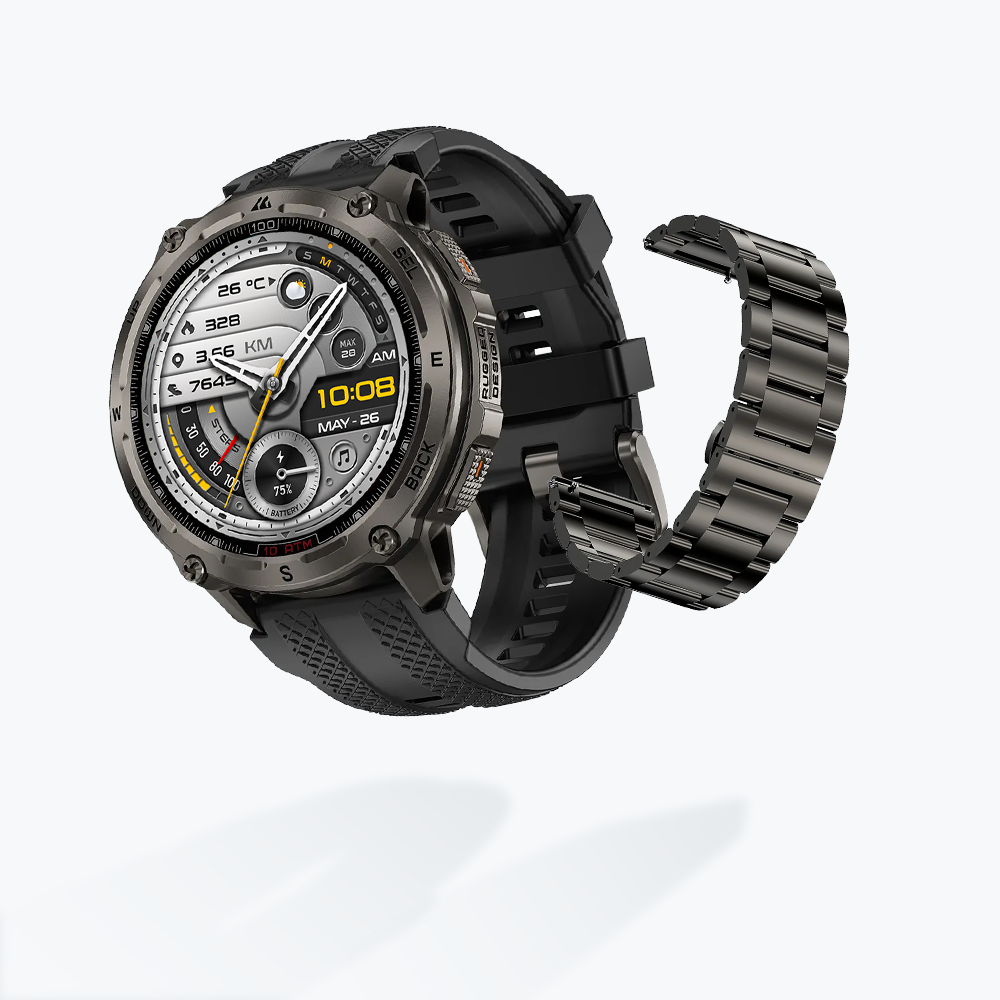
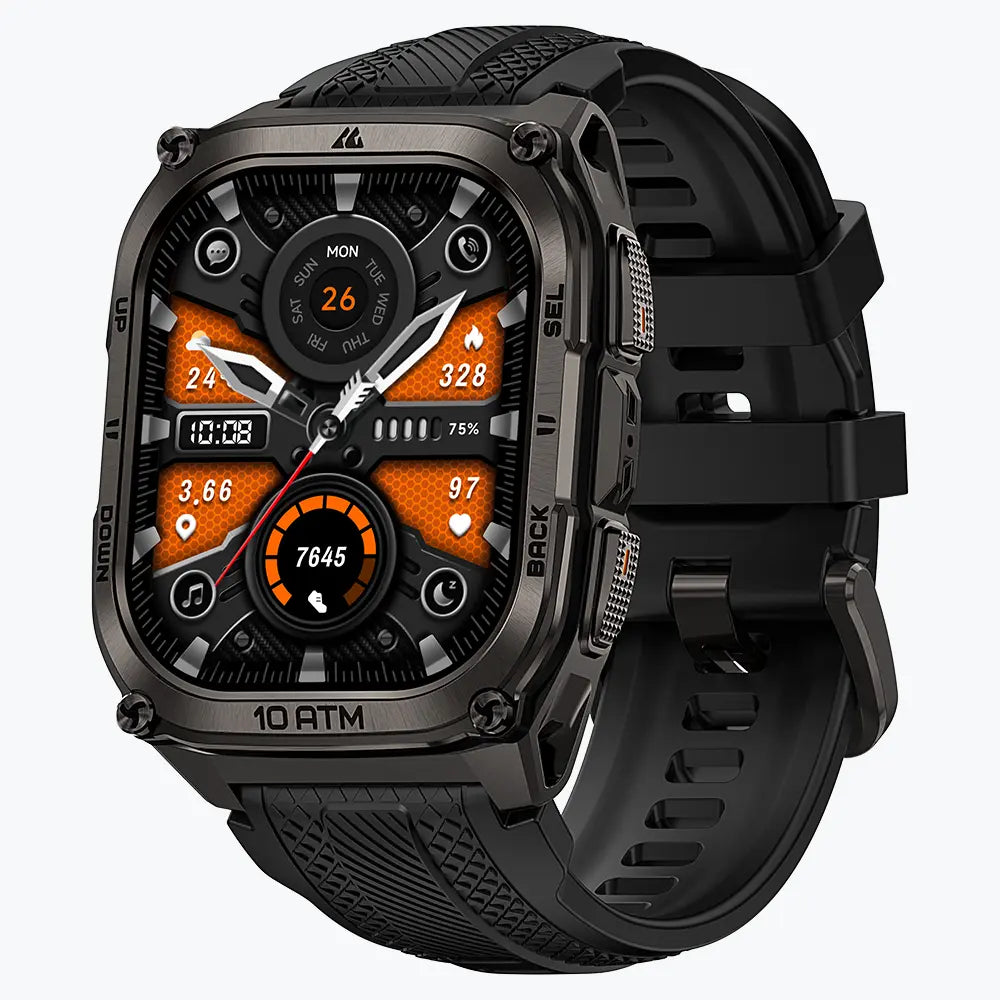
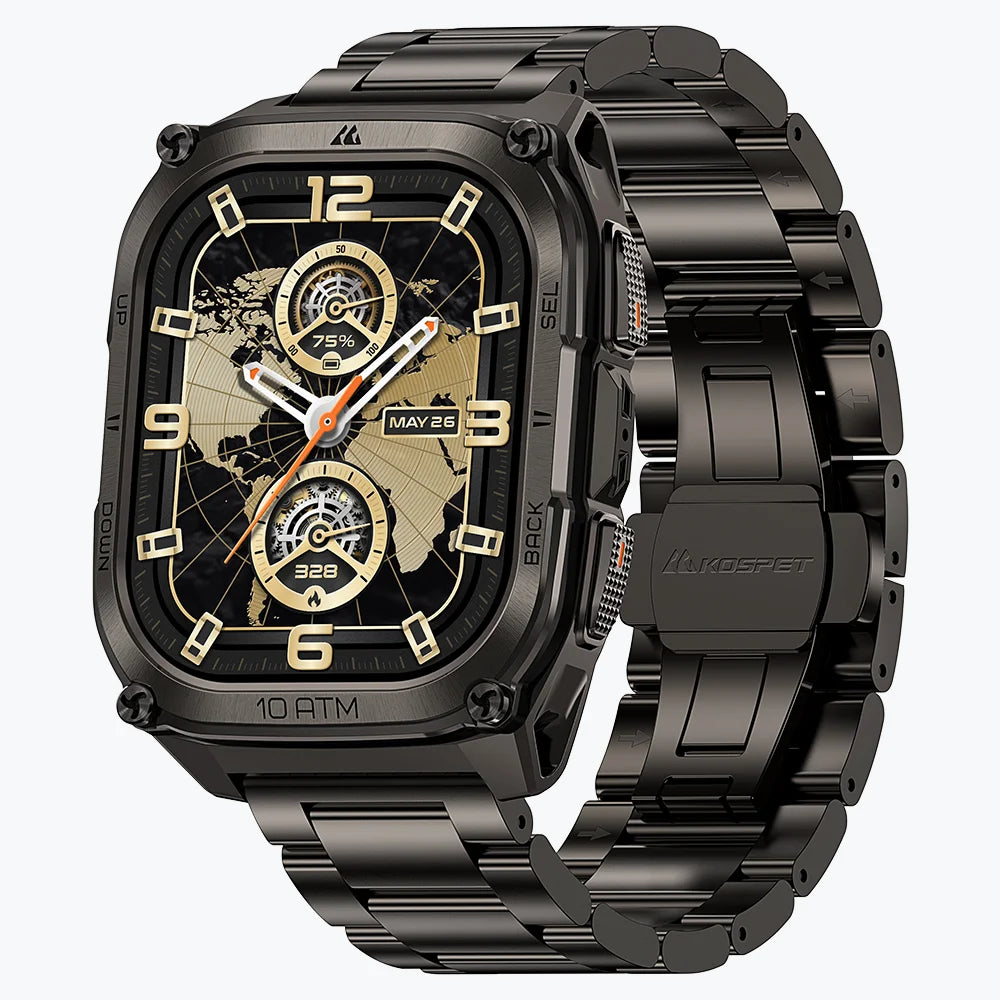
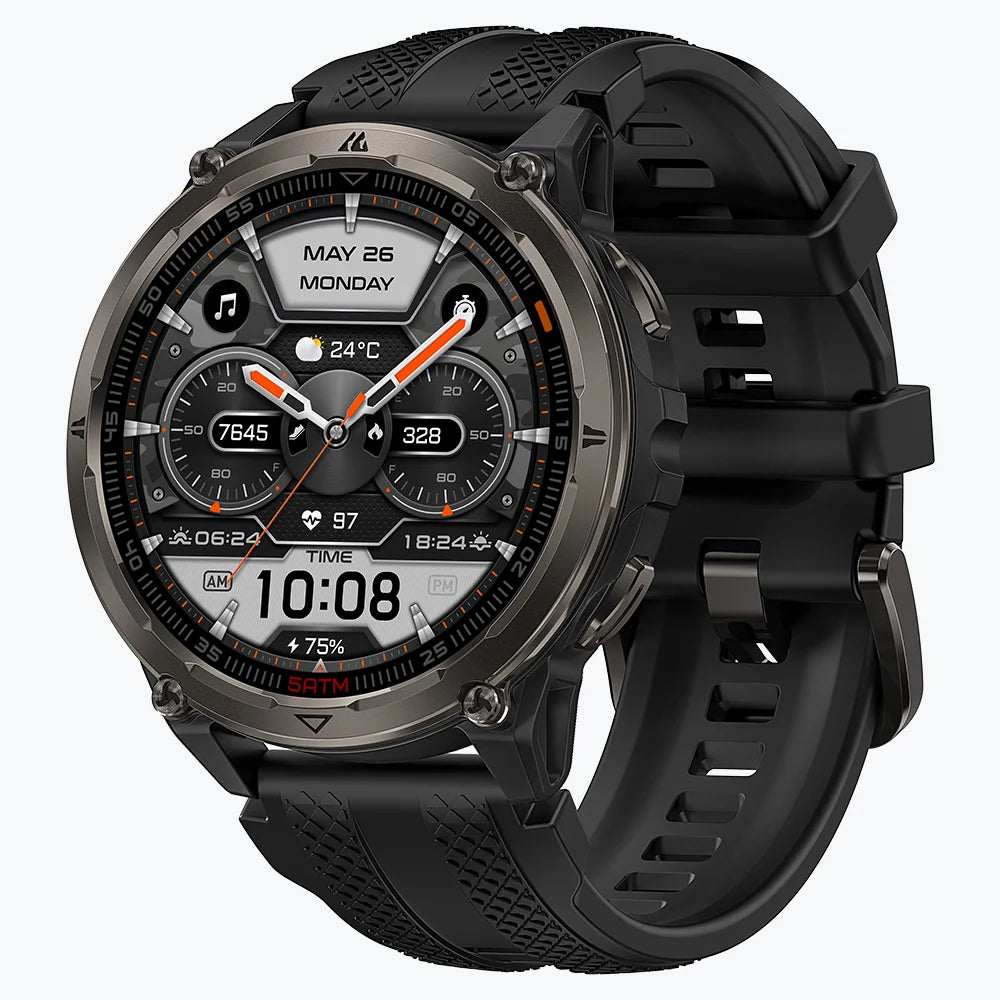
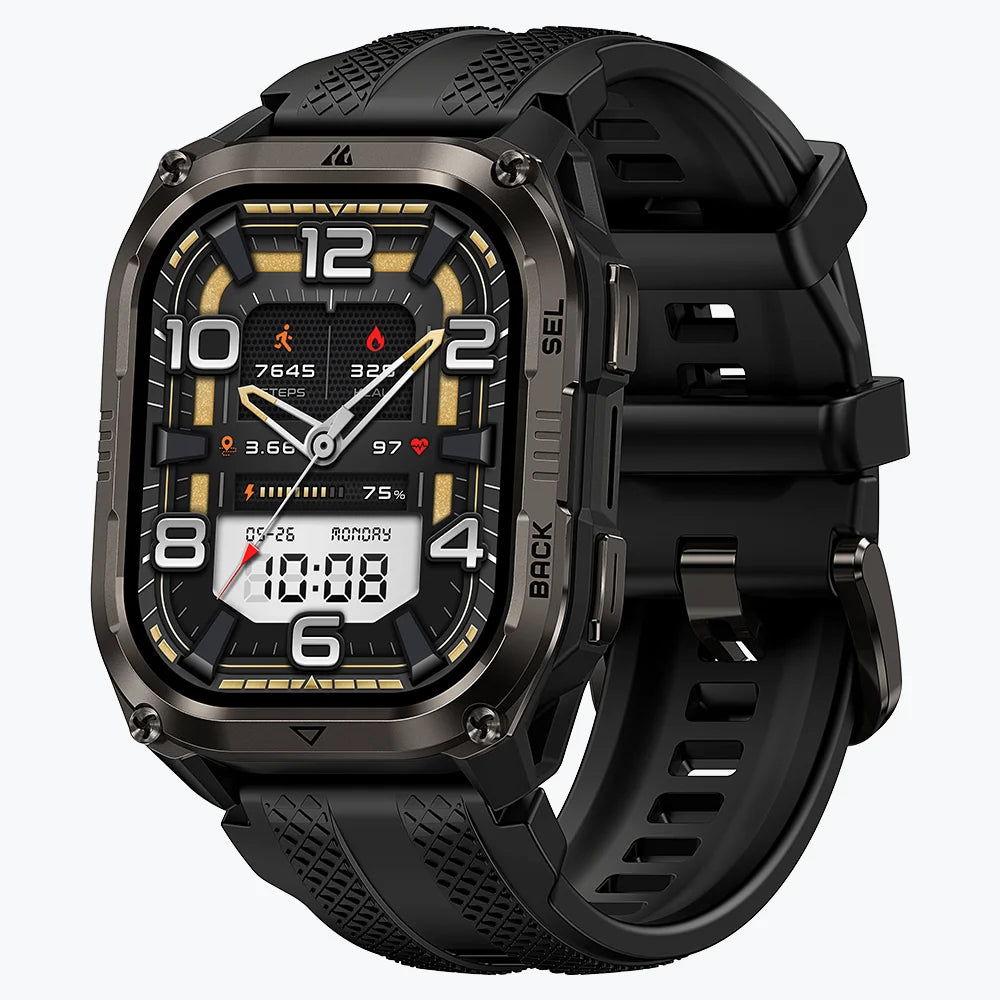
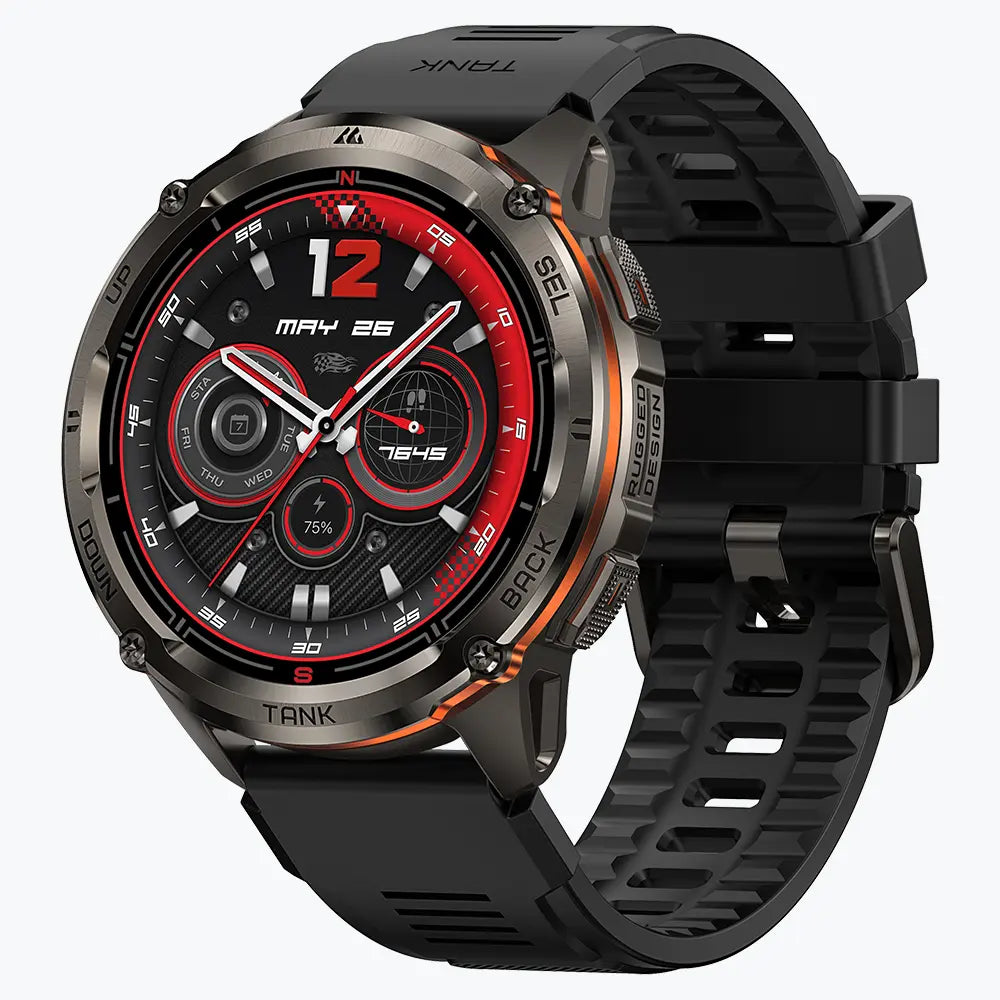
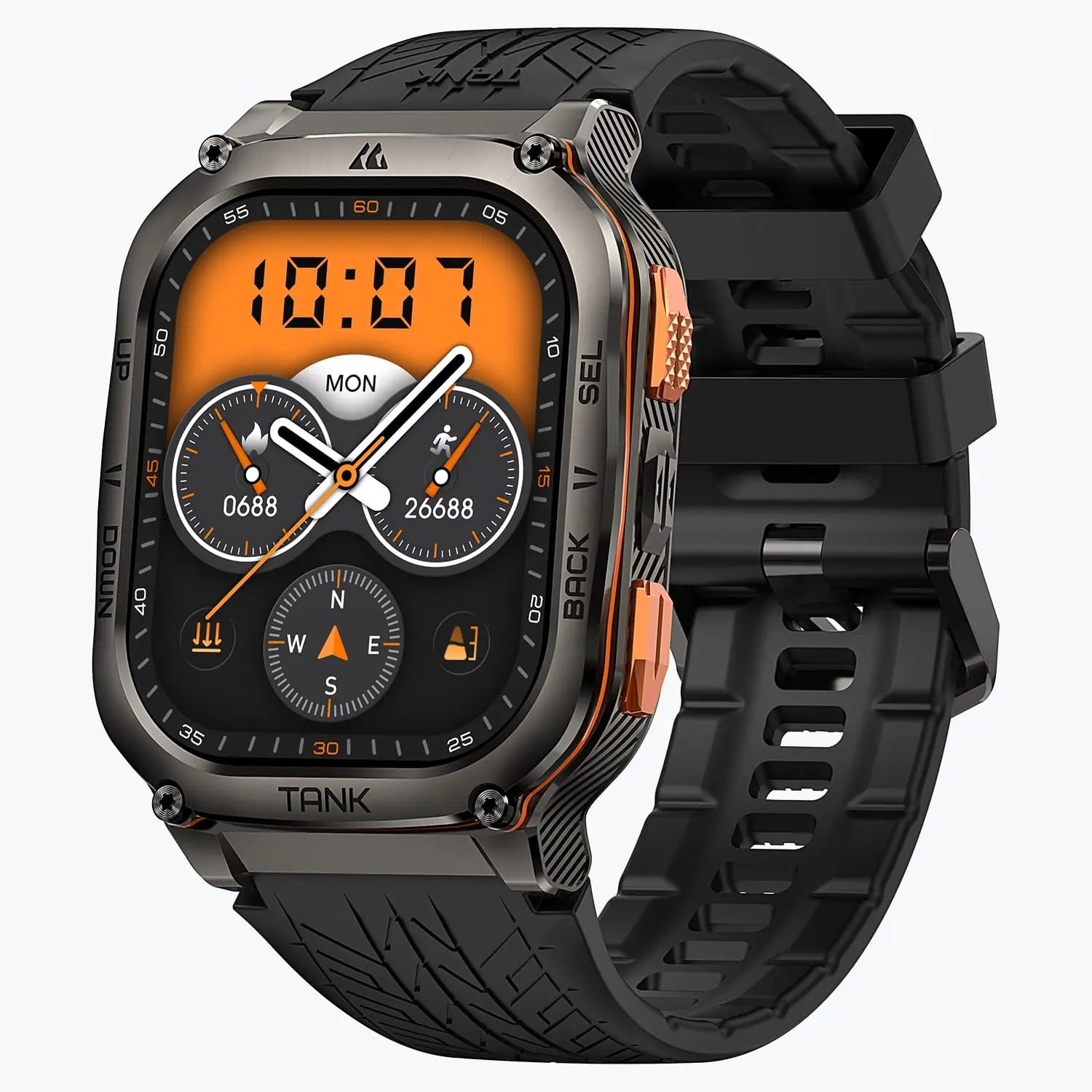
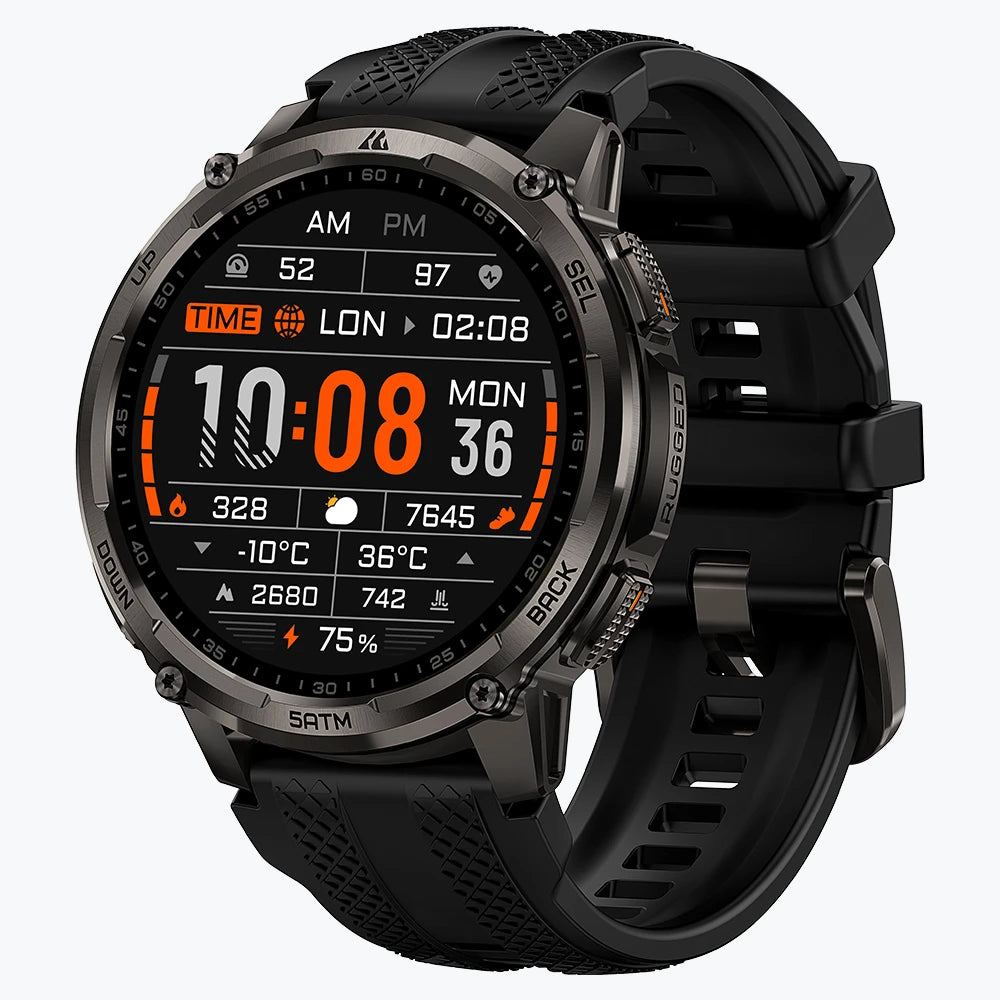
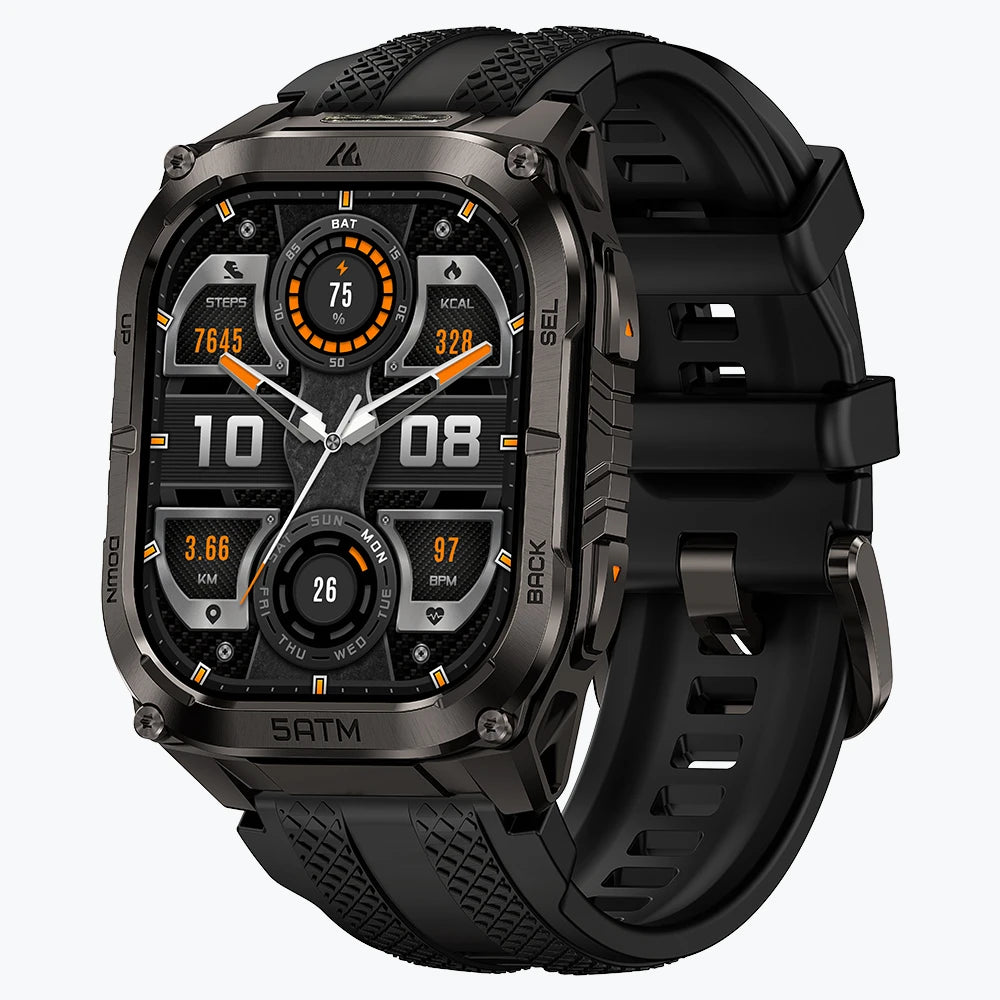
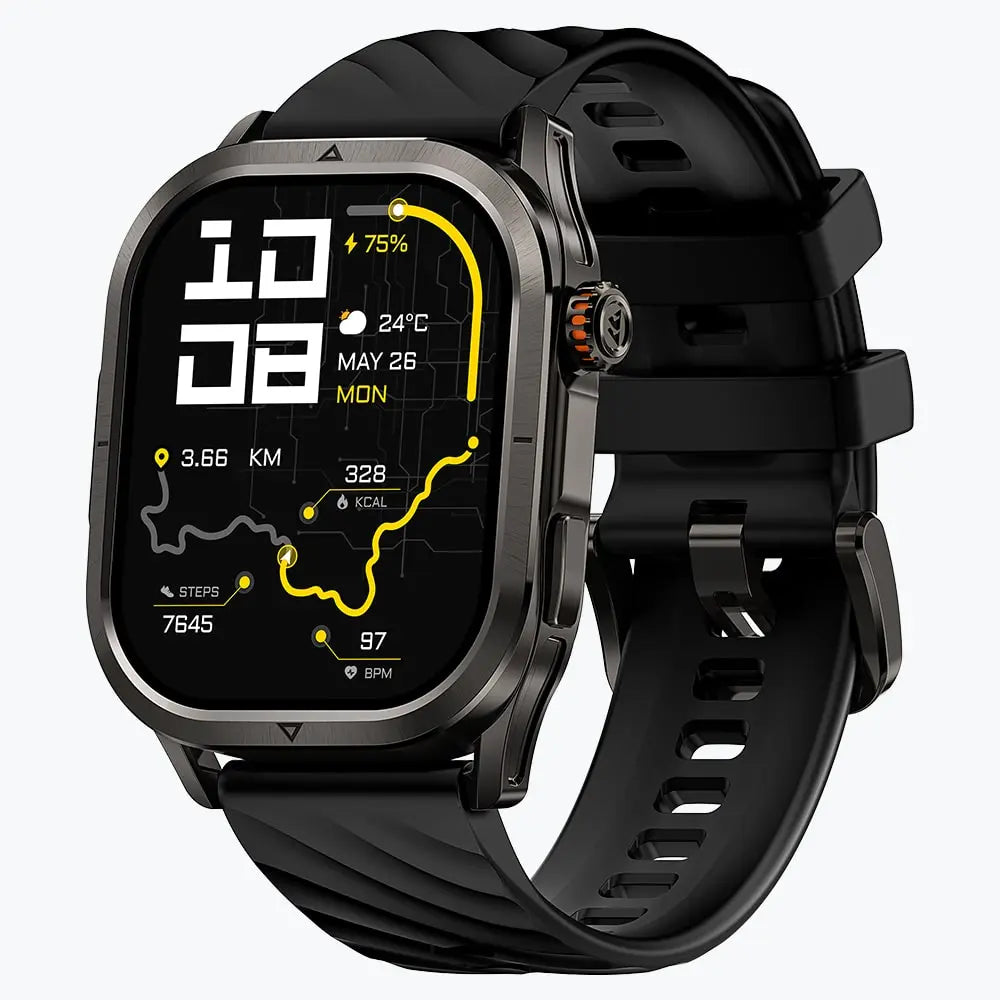


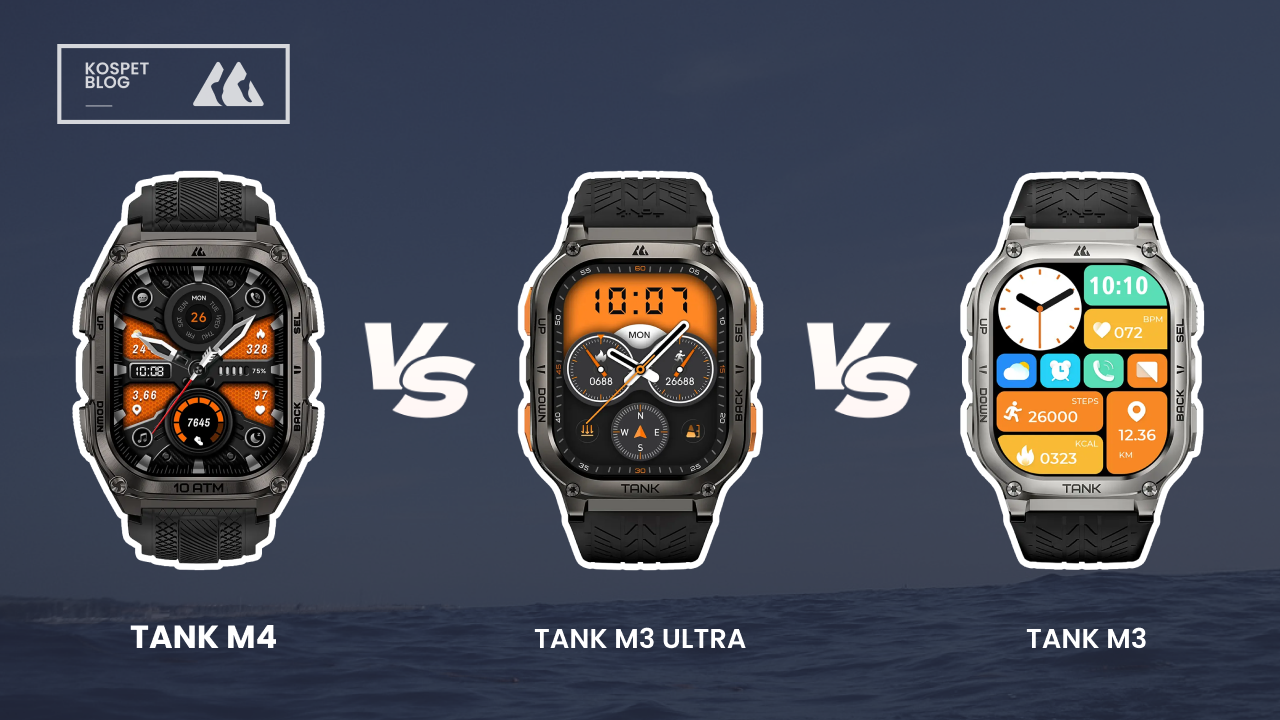
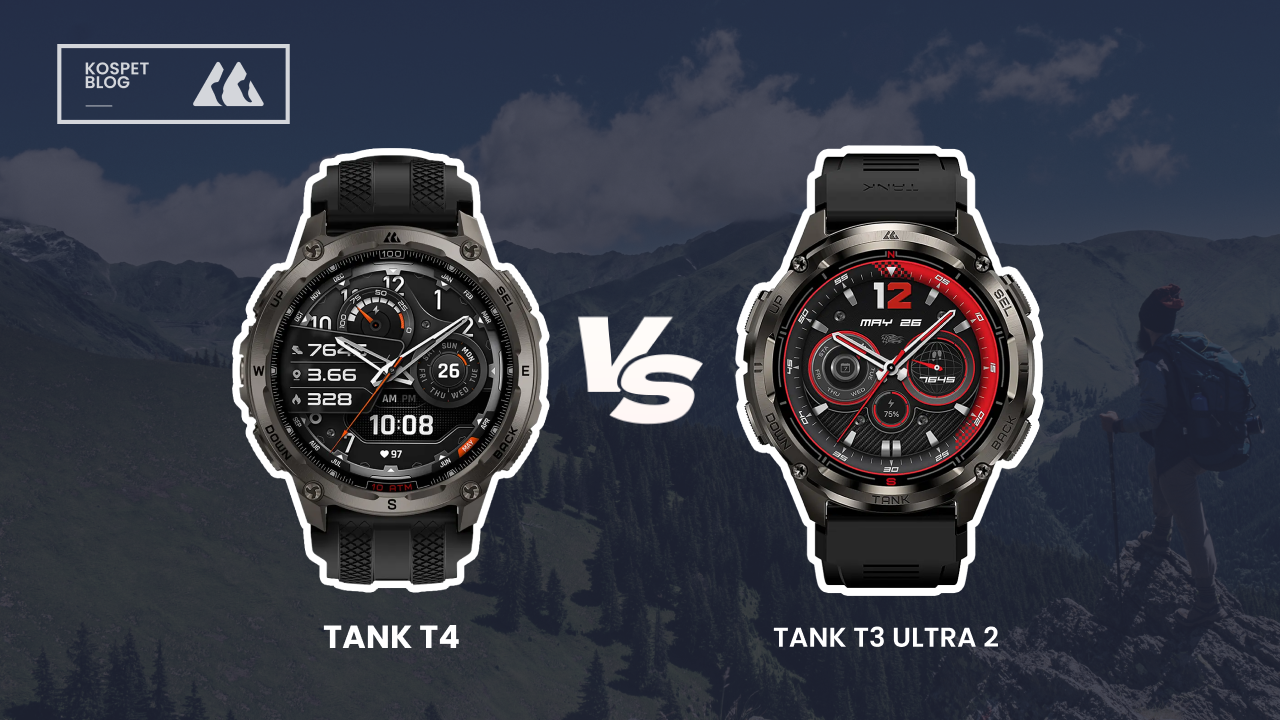
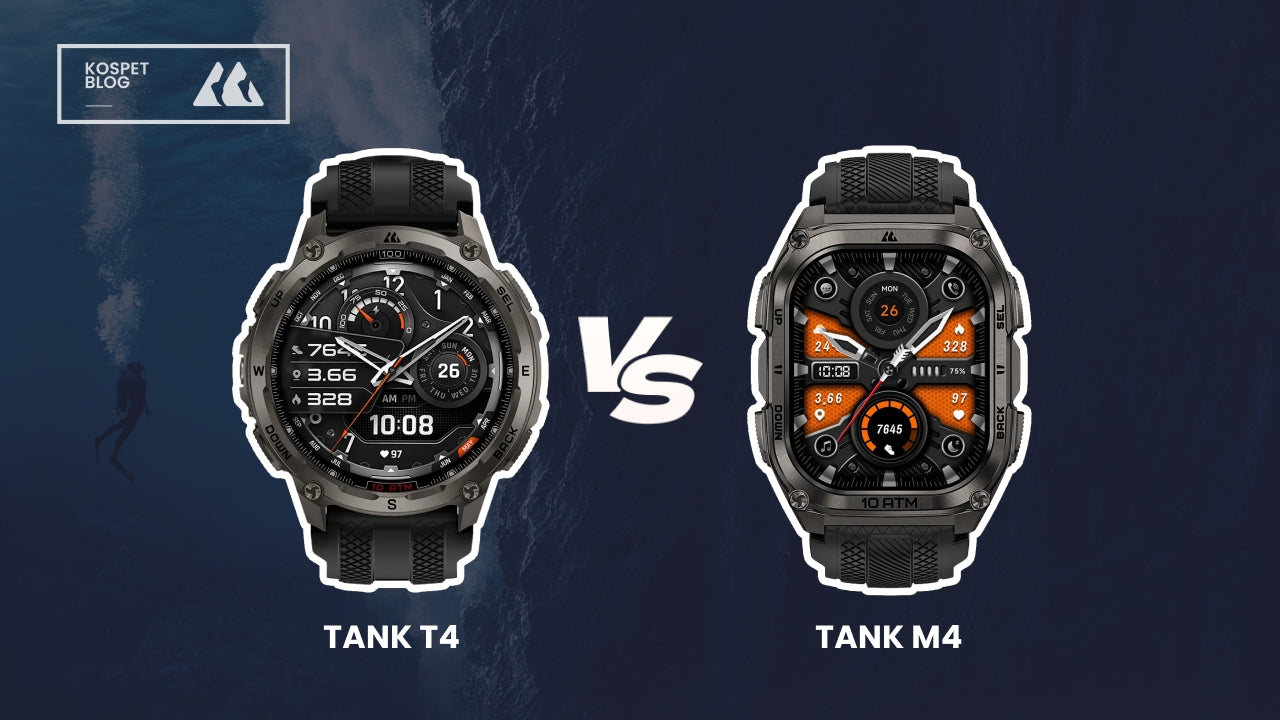
As models within the same outdoor watch series, the TANK T3, TANK T3 Ultra 2, and TANK T4 share a rugged design and cover similar everyday basics. This is why they can feel nearly identical at first.
In practice, the differences are not cosmetic. They come from three functional boundaries that change what the watch can do beyond daily health monitoring:
- Positioning capability: whether the watch has built-in GPS and can track outdoors without relying on a phone.
- Navigation level: whether the watch can only record a route, or can also guide you with maps and navigation features.
- Water-resistance ceiling: the maximum rating (5ATM vs 10ATM), which affects long-term confidence in water-heavy use.

KOSPET TANK T4 vs TANK T3 vs TANK T3 Ultra 2: Specifications Comparison
The table below includes only the specifications that materially change how each watch is used. It is intended to clarify capability boundaries, not to list every parameter.
| Spec / Feature | TANK T3 | TANK T3 Ultra 2 | TANK T4 |
|---|---|---|---|
| Built-in GPS | No | Yes (Dual-band L1+L5; 6 satellite systems) | Yes |
| Route recording (phone-free) | Not supported (no GPS) | Supported | Supported |
| Route Back | Not applicable | Supported | Supported |
| Offline Maps | No | No | Yes |
| Real-time navigation | No | No | Yes |
| Route import | No | No | Yes (GPX/KML supported) |
| Battery capacity | 500 mAh | 470 mAh | 500 mAh |
| Typical battery life | 10–15 days | 12–15 days | 14–15 days (Up to 30 days of battery life with the included power pocket) |
| Continuous GPS battery life | Not applicable | 30–35 hours | 21–22 hours |
| Water resistance | 5ATM + IP69K | 5ATM + IP69K | 10ATM + IP69K (supports 45m freediving/scuba/gauge dive) |
| Storage (relevant for maps) | 256M NOR | 256M NOR | 32GB ROM |
Key Differences Between TANK T4, TANK T3, and T3 Ultra 2
Daily wear vs outdoor tracking vs navigation
The most important distinction is what each model is designed to handle without a phone:
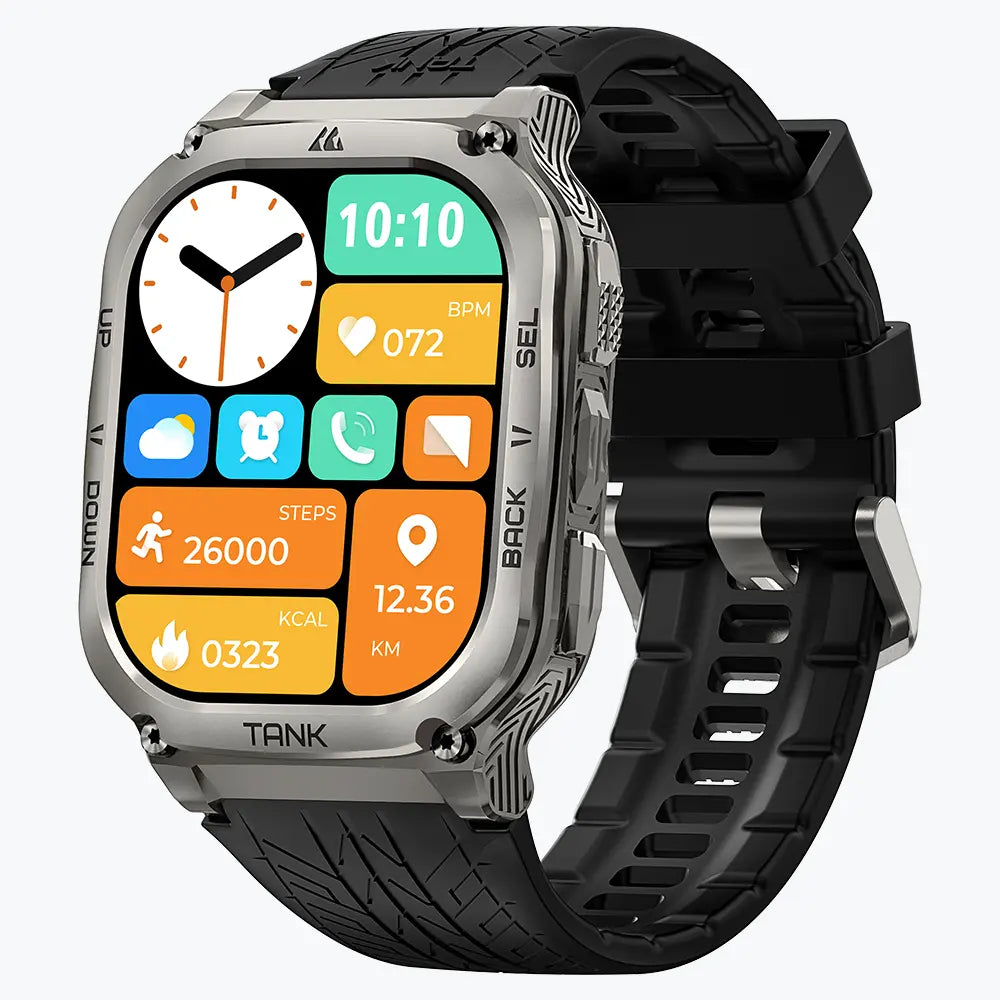
- TANK T3 is a rugged smartwatch. With no built-in GPS, it does not operate as an independent outdoor route device. Its value is a stable, straightforward daily experience with fewer location-related functions to manage.
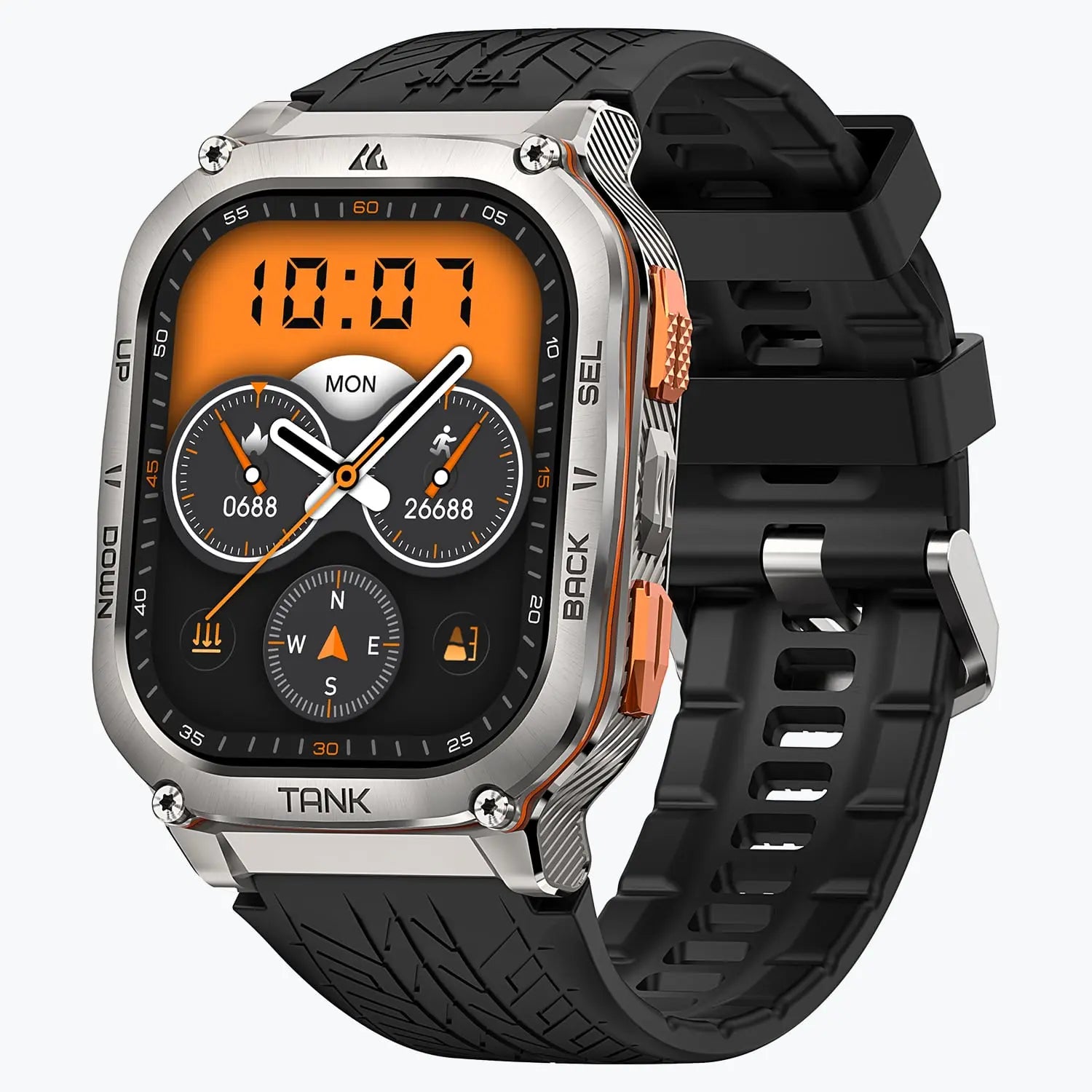
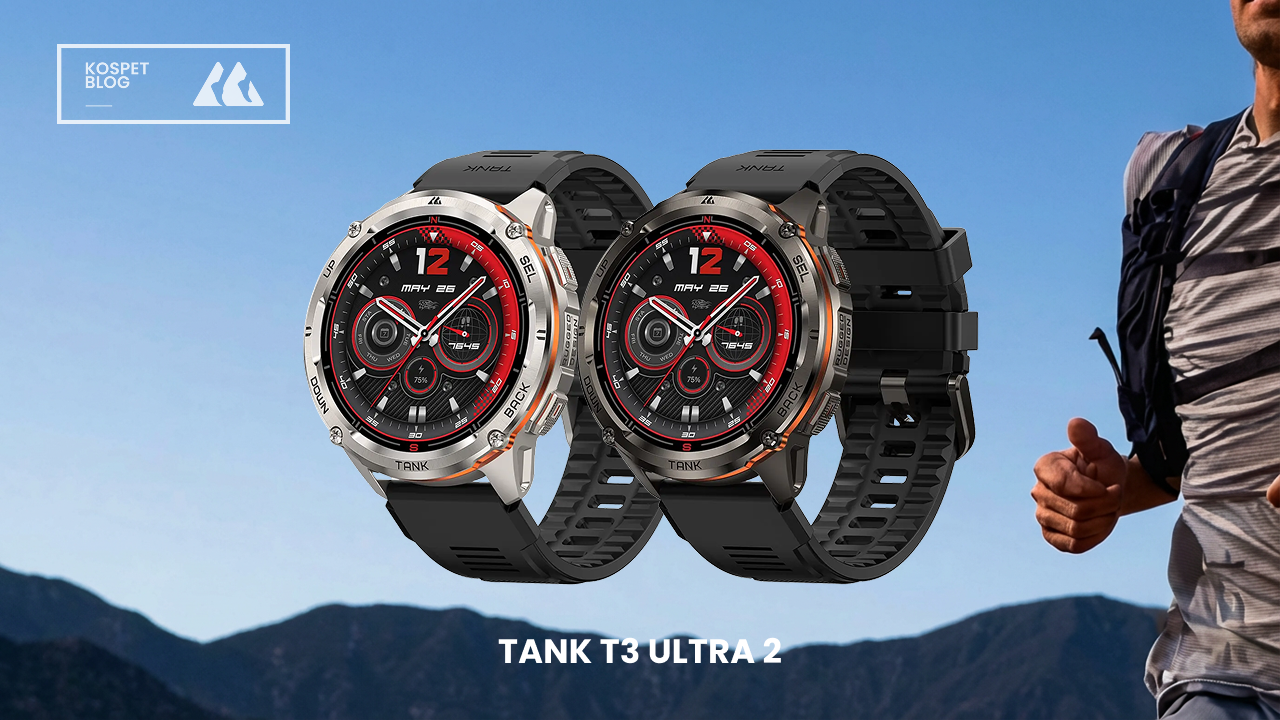
- TANK T3 Ultra 2 is a tracking-focused model. It adds dual-band GPS (L1+L5) and supports route recording and Route Back, which directly serves outdoor training and route retracing needs.
- TANK T4 is navigation-focused. It extends GPS tracking into on-wrist guidance by adding offline maps, real-time navigation, and route import.
What each model emphasizes beyond health monitoring
All three models cover daily health monitoring. The differences appear in their secondary emphasis:
- TANK T3 emphasizes rugged daily practicality and simplicity. It is not positioned around outdoor route functions, which reduces functional overhead for users who do not need phone-free tracking.
- TANK T3 Ultra 2 emphasizes outdoor tracking capability. Dual-band GPS and Route Back support make it more suitable for users who want reliable route records for running, hiking, and cycling.
- TANK T4 emphasizes navigation capability. Offline maps and route tools are designed for situations where route decisions matter, such as complex trails or unfamiliar areas.
Water-resistance ceiling: 5ATM vs 10ATM
Water resistance is a functional limit rather than a marketing detail. The lineup divides cleanly here:
- TANK T3 and TANK T3 Ultra 2 are rated at 5ATM + IP69K.
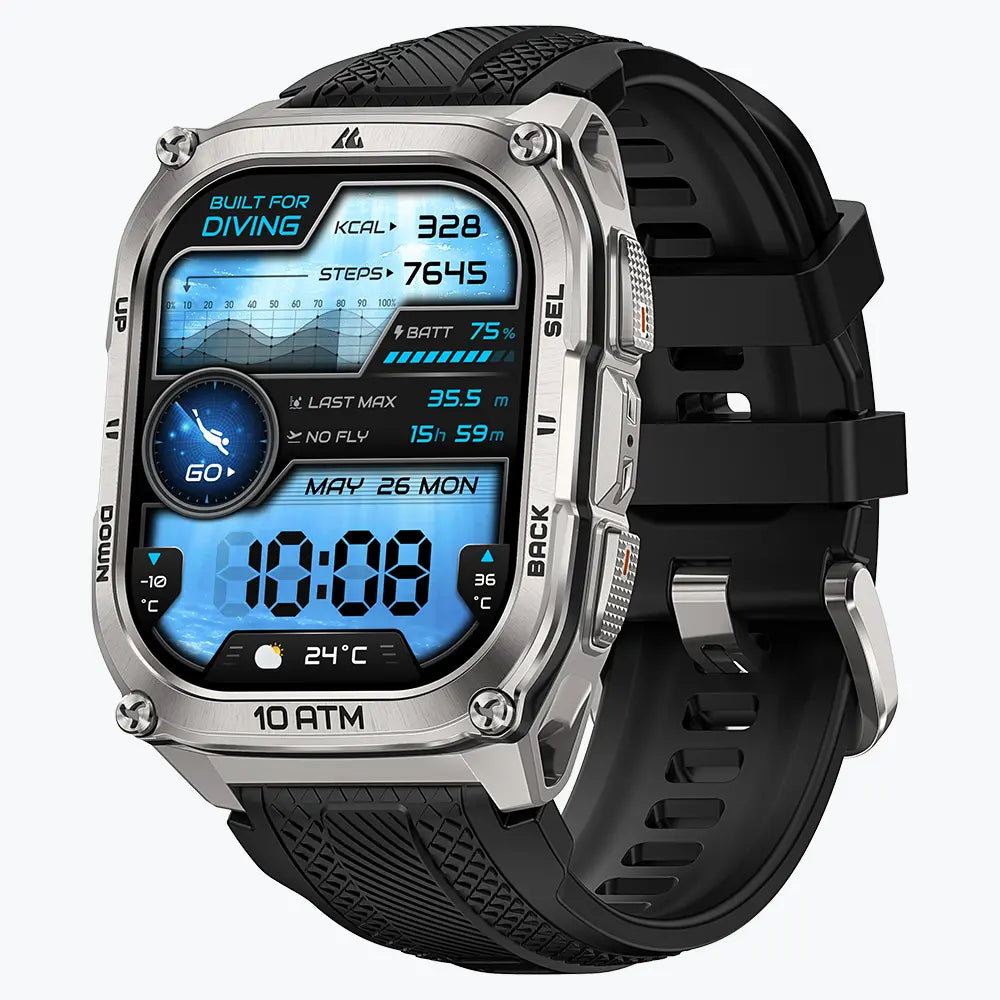
- TANK T4 increases the ceiling to 10ATM + IP69K and lists support for 45m freediving/scuba/gauge dive.
This difference matters most for users who frequently expose the watch to water-intensive environments or prefer a higher pressure-tolerance margin.
Read More: Top Sports Watches for Men Waterproof for Swimming
GPS and Navigation: Built-in GPS, Breadcrumb, and Offline Maps
TANK T3: no built-in GPS
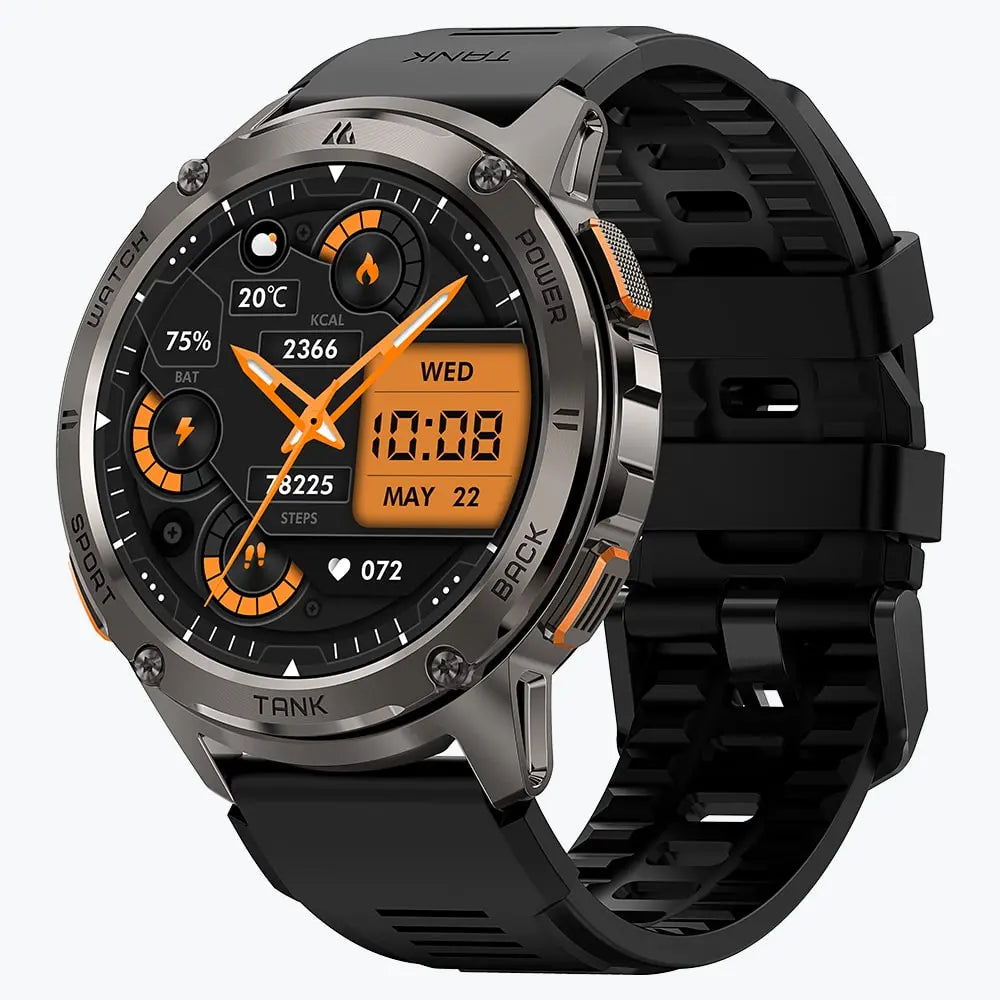
KOSPET TANK T3 Smartwatch
109,99 €EUR
TANK T3 does not include built-in GPS. As a result, it does not provide phone-free route recording, Route Back, or navigation functions.
This design keeps the watch focused on daily rugged wear and avoids the operational complexity and power behavior associated with GPS-based outdoor features.
TANK T3 Ultra 2: dual-band GPS for route recording, plus Route Back

TANK T3 Ultra 2 adds dual-band GPS (L1+L5) and supports route recording without relying on a phone. It also supports Route Back, which is typically used to retrace a recorded path.
However, it does not include offline maps or real-time navigation, so its navigation layer remains route-line based rather than map based.
TANK T4: offline maps and navigation tools

TANK T4 adds a map and navigation layer on top of GPS tracking. It supports Offline Maps, Real-time Navigation, and Route Import (GPX/KML).
This set of features is intended for scenarios where route decisions are made during the activity rather than reviewed afterward.
TANK T4 also lists 32GB ROM, which is a meaningful hardware difference for storing map data and route resources.
Battery Life Comparison: Daily Use vs GPS Tracking
Two battery modes that change expectations
Battery comparisons are clearer when separated into two practical modes:
- Typical daily use (notifications, health monitoring, standard usage patterns).
- Continuous GPS use (sustained positioning, typically during outdoor activities).
Typical daily use
- TANK T3: 10–15 days
- TANK T3 Ultra 2: 12–15 days
- TANK T4: 14–15 days
Continuous GPS use
- TANK T3: not applicable (no GPS)
- TANK T3 Ultra 2: 30–35 hours
- TANK T4: 21–22 hours
In other words, T3 avoids GPS-related drain entirely, Ultra 2 is positioned with longer continuous GPS time, and T4 allocates system resources to support navigation features such as maps and route tools.
Water Resistance Comparison: 5ATM + IP69K vs 10ATM
5ATM + IP69K
TANK T3 and TANK T3 Ultra 2 list 5ATM + IP69K. This tier generally aligns with robust daily water protection and workout use in wet environments.
10ATM + IP69K
TANK T4 lists 10ATM + IP69K and also states support for 45m freediving/scuba/gauge dive. The practical distinction is a higher pressure-tolerance ceiling, which is most relevant for frequent water exposure and users who prefer greater long-term margin.
Which KOSPET TANK Watch Should You Choose
The table below summarizes the models by use focus. It is written to describe capability and emphasis, rather than to instruct a purchase choice.
| Use focus | Core difference | Model | What it enables (beyond health monitoring) |
|---|---|---|---|
| Rugged daily wear | No built-in GPS | TANK T3 | Stable daily use with fewer location-related functions; suitable when phone-free route tracking and navigation are not required. |
| Outdoor tracking | Dual-band GPS + Route Back | TANK T3 Ultra 2 | Phone-free route recording for runs/hikes/cycling; Route Back support for retracing a recorded path; designed around tracking reliability rather than map navigation. |
| Navigation and route tools | Offline maps + navigation + route import; higher water ceiling | TANK T4 | Offline maps, real-time navigation, and GPX/KML route import; designed for route decisions during the activity; 10ATM water-resistance ceiling for water-intensive environments. |
Conclusion
All three models cover daily health monitoring. The meaningful separation comes from GPS presence, navigation depth (route line vs maps), and the water-resistance ceiling.
FAQs
What’s the difference between Route Back and Offline Maps?
Route Back helps you retrace your recorded path, while Offline Maps show map context and support navigation decisions on the watch. In short, Route Back is “return,” Offline Maps are “navigate.”
If TANK T3 has no built-in GPS, what can it do beyond health tracking?
It works best as a rugged daily smartwatch for calls, notifications, and general activity use. Location and route tracking remain phone-based.
Does 10ATM on TANK T4 matter if I don’t dive?
Yes, it raises the water-resistance ceiling and provides more margin for frequent water exposure. If your use is mostly everyday wet conditions, 5ATM + IP69K is typically sufficient.



Leave a comment
This site is protected by hCaptcha and the hCaptcha Privacy Policy and Terms of Service apply.